Your browser is out-of-date!
For a richer surfing experience on our website, please update your browser. Update my browser now!
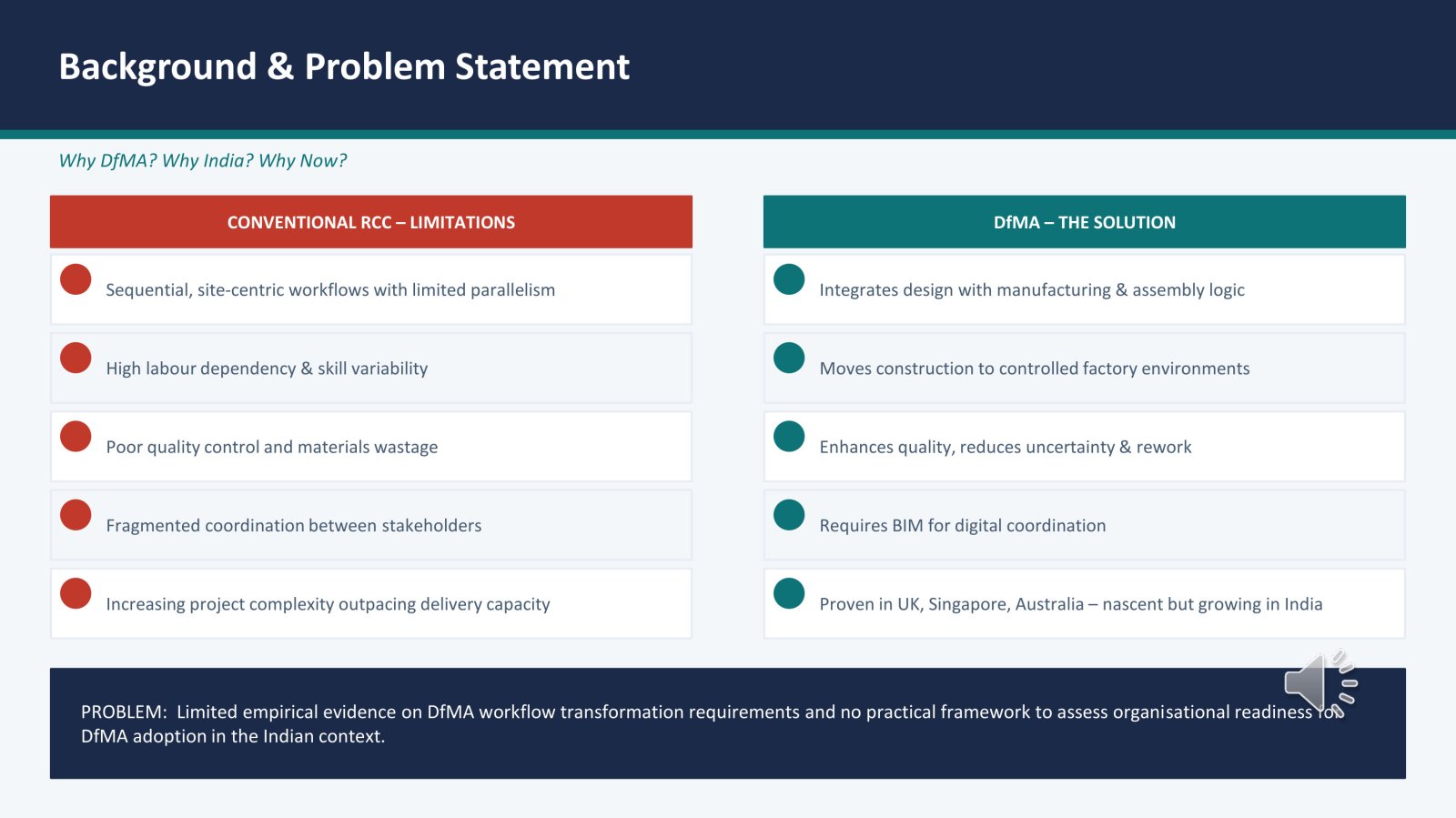
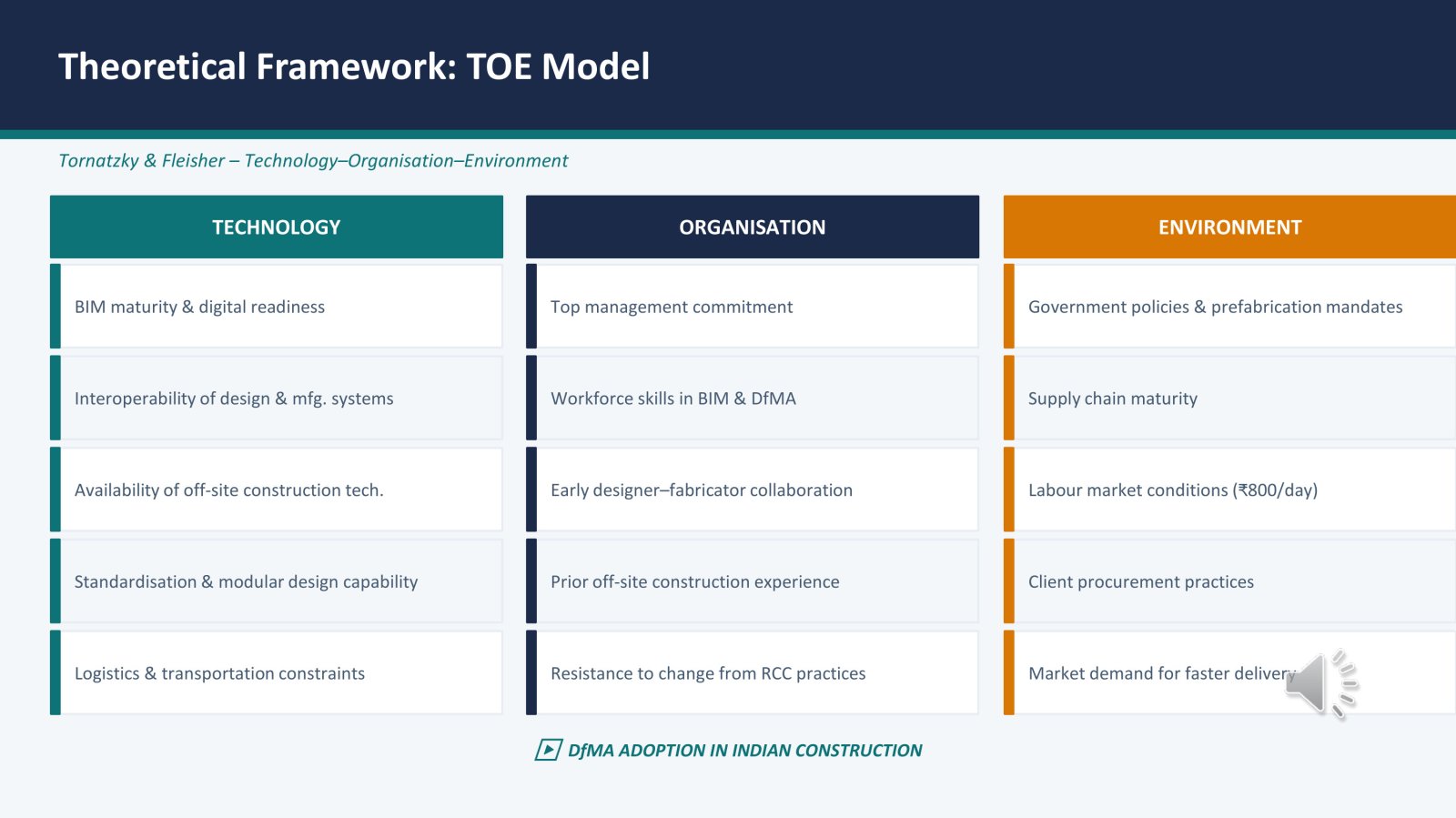
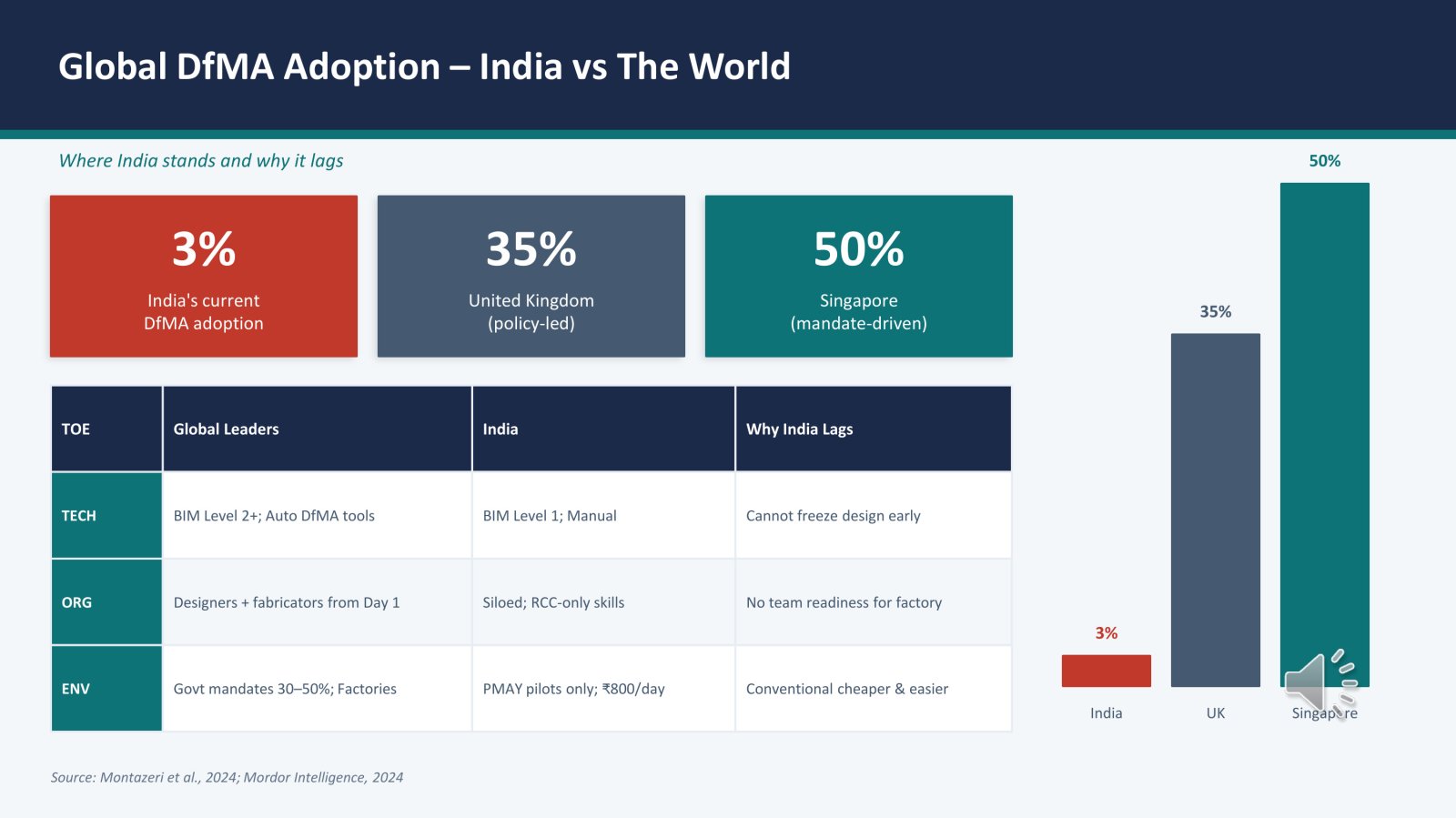
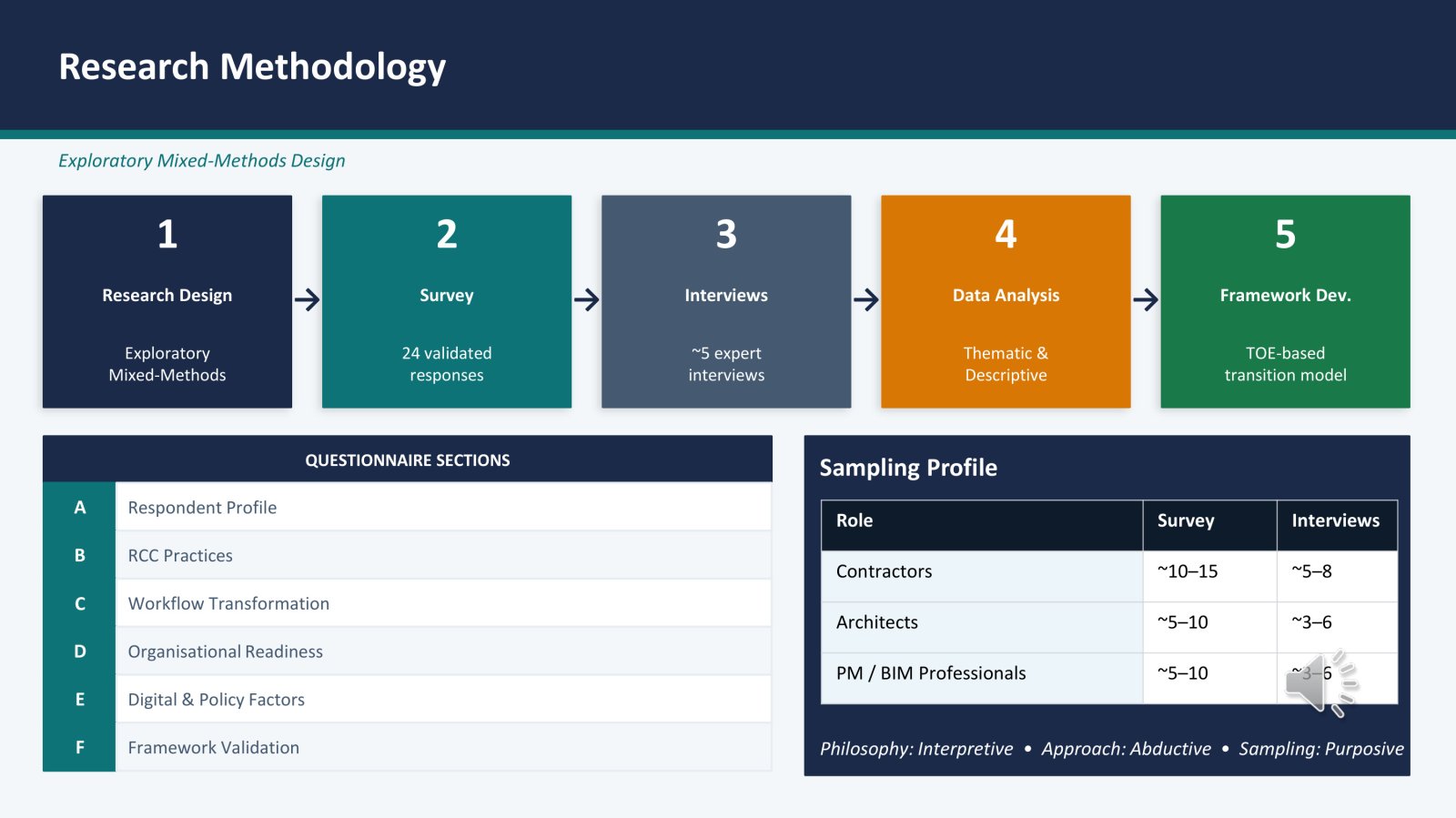
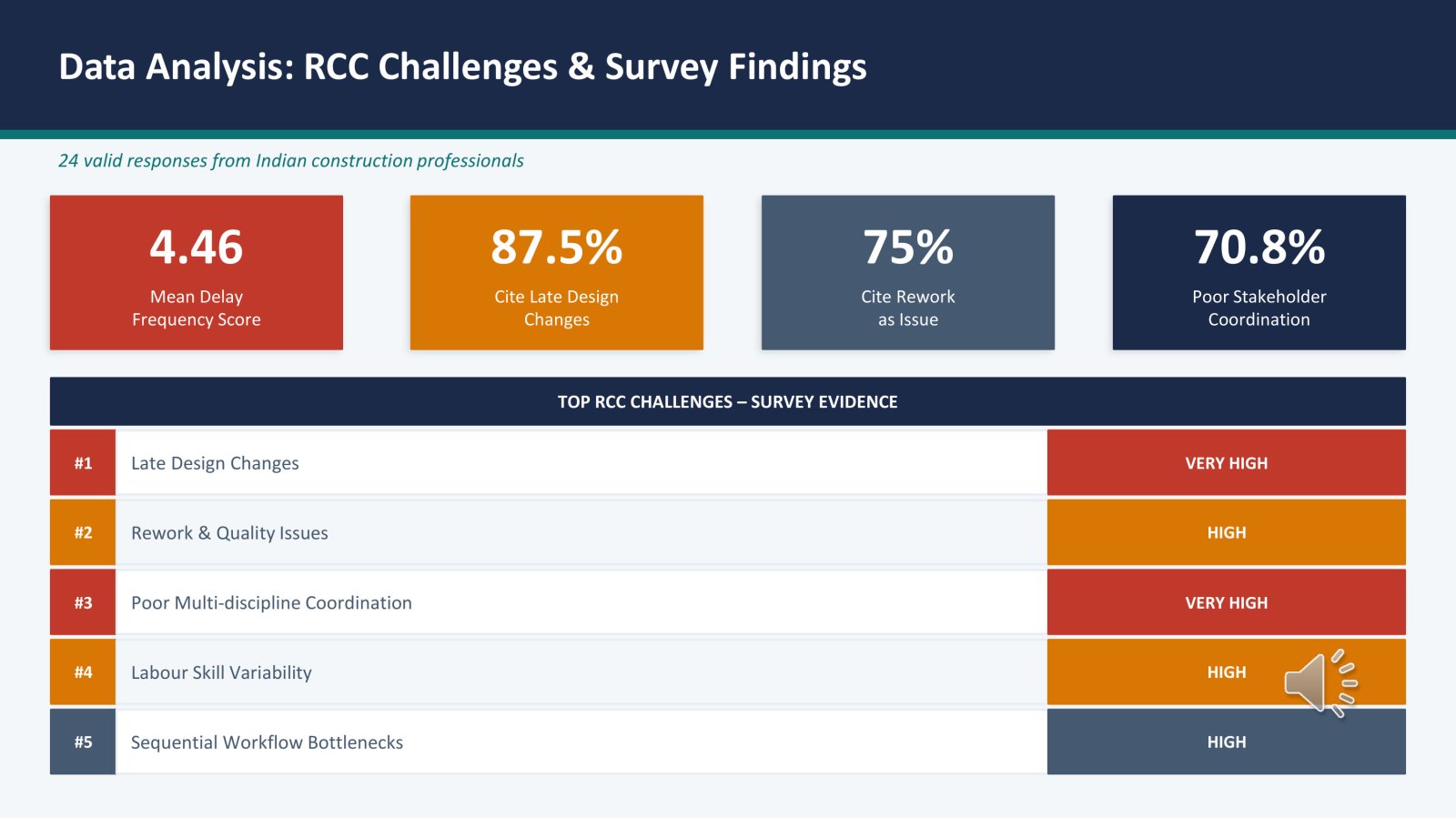
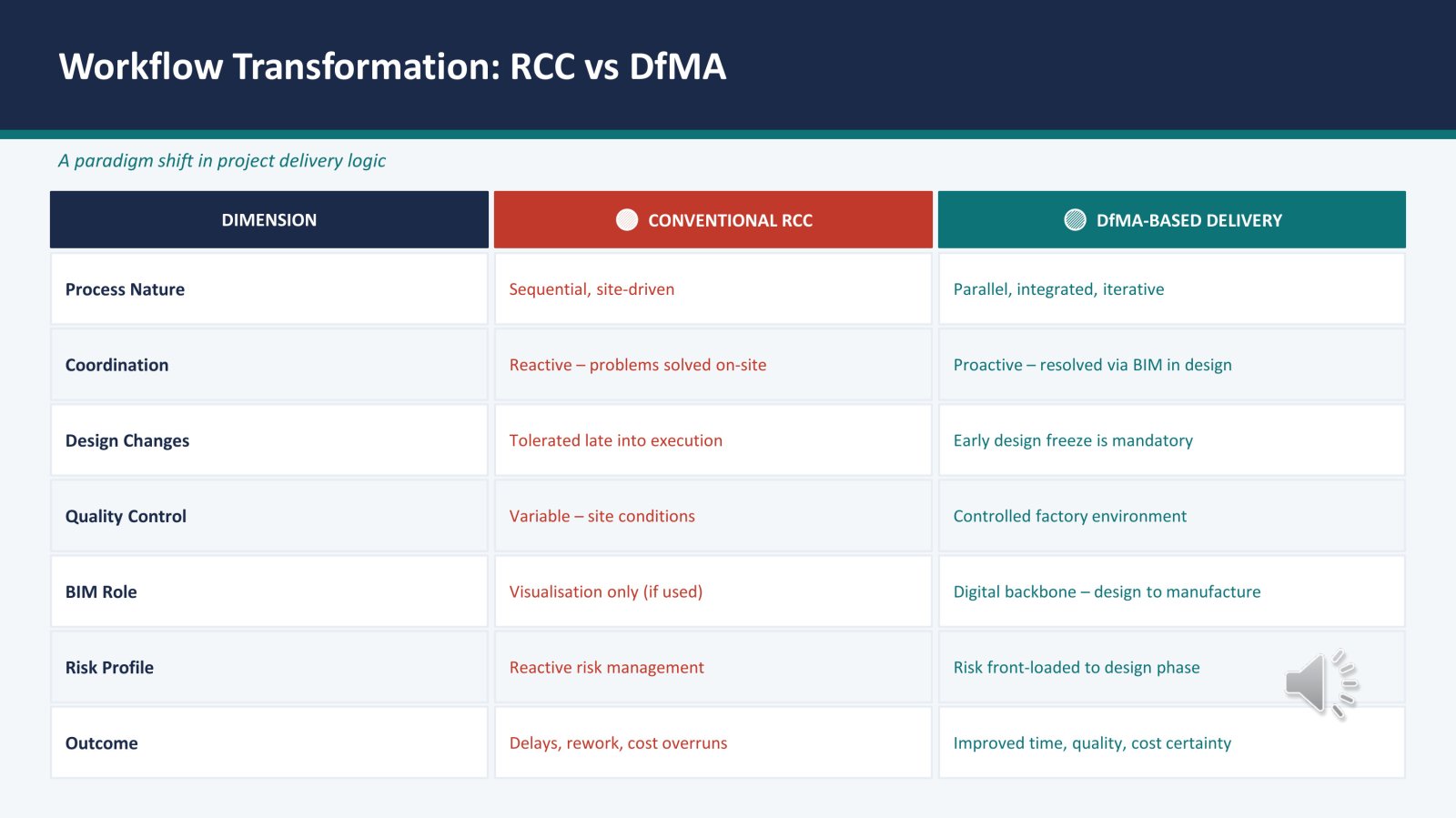
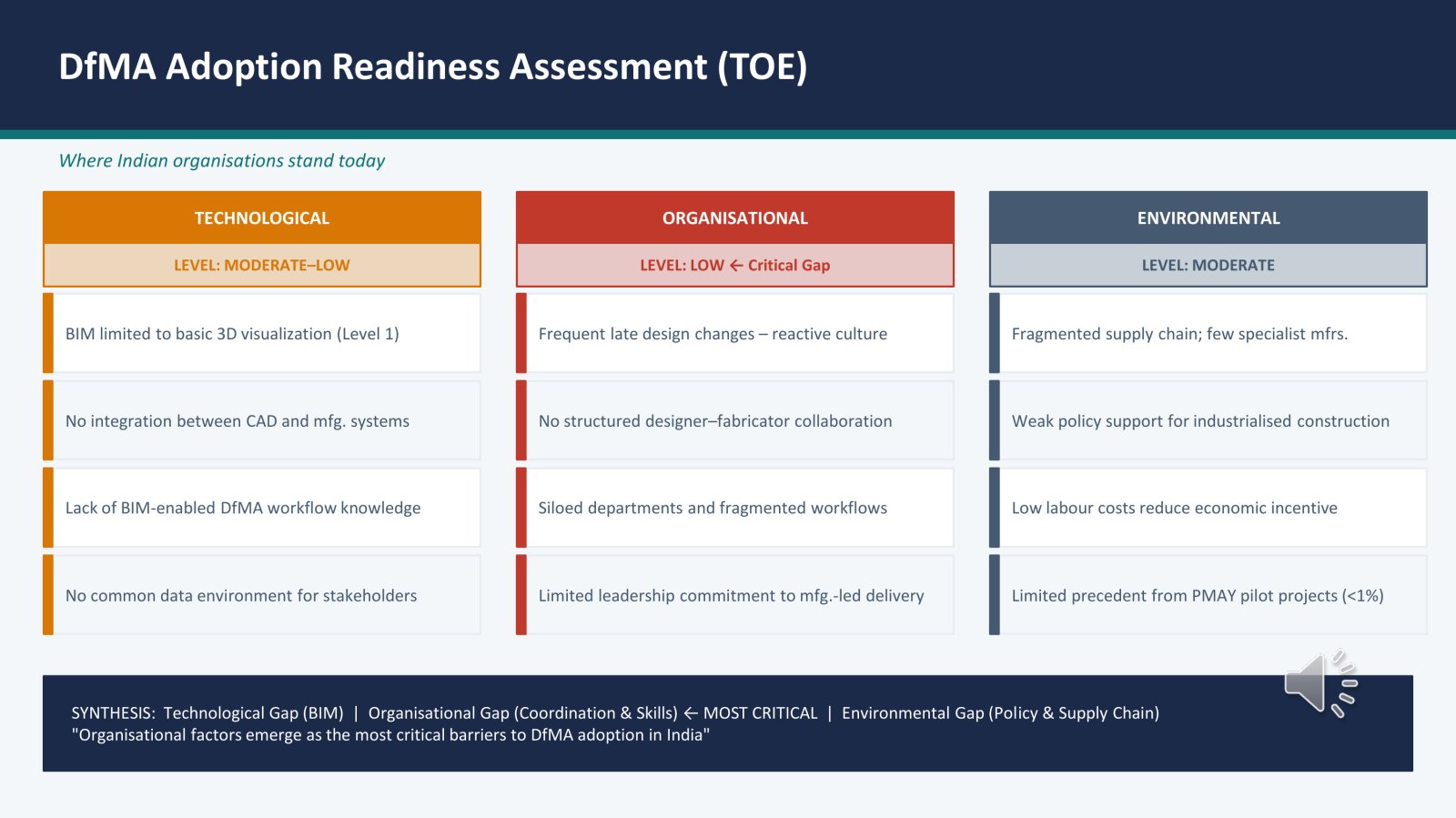
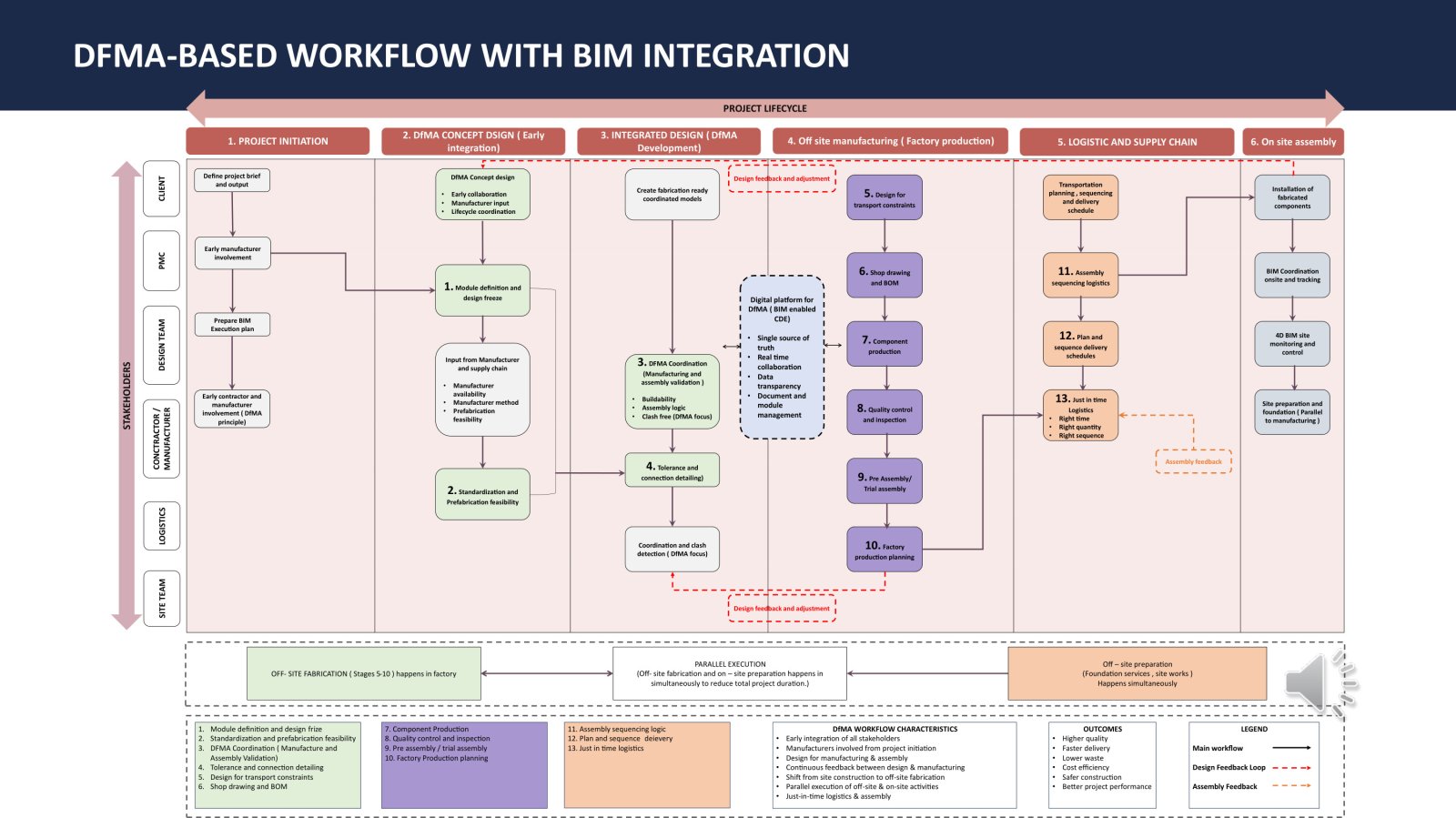
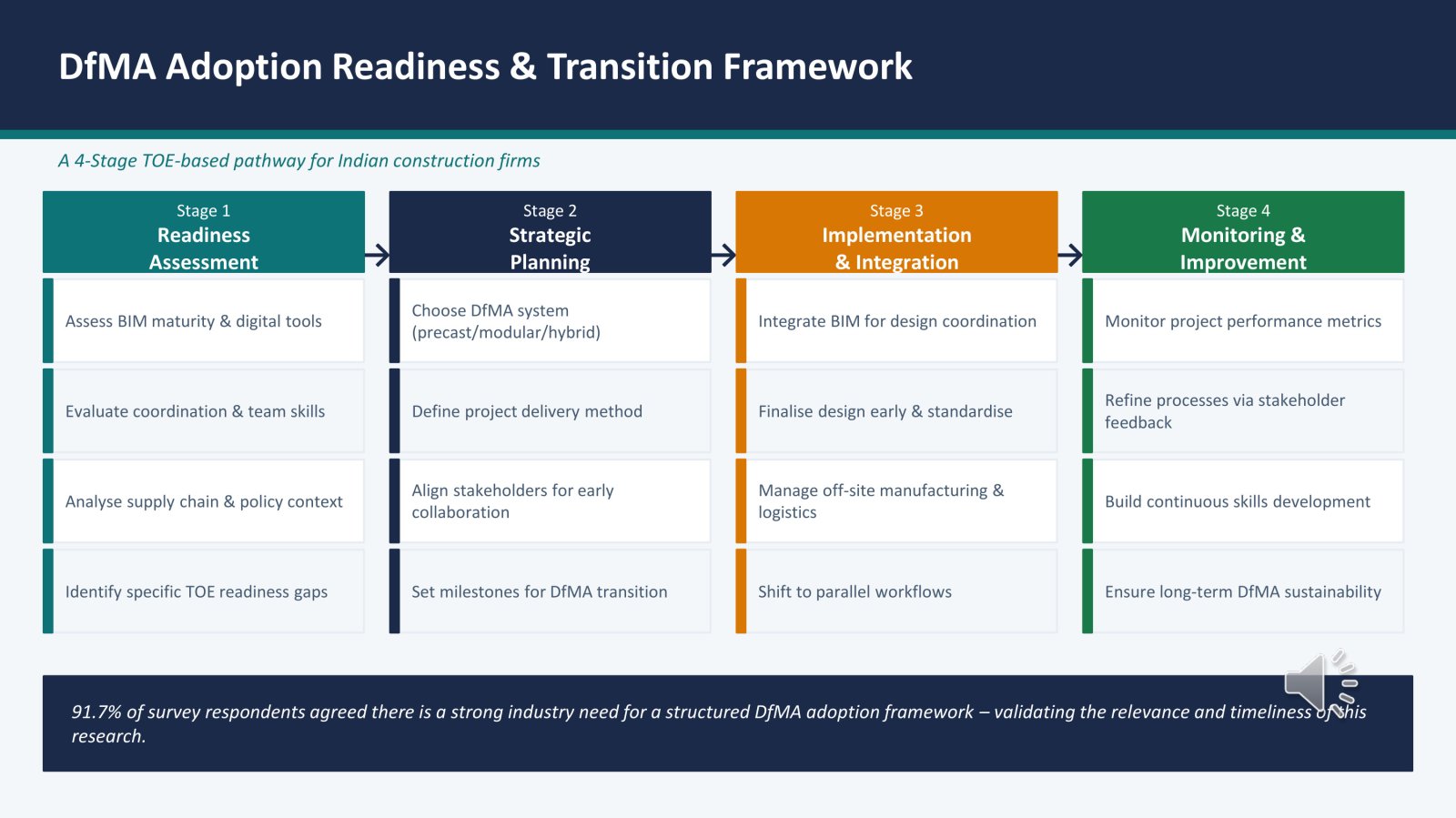
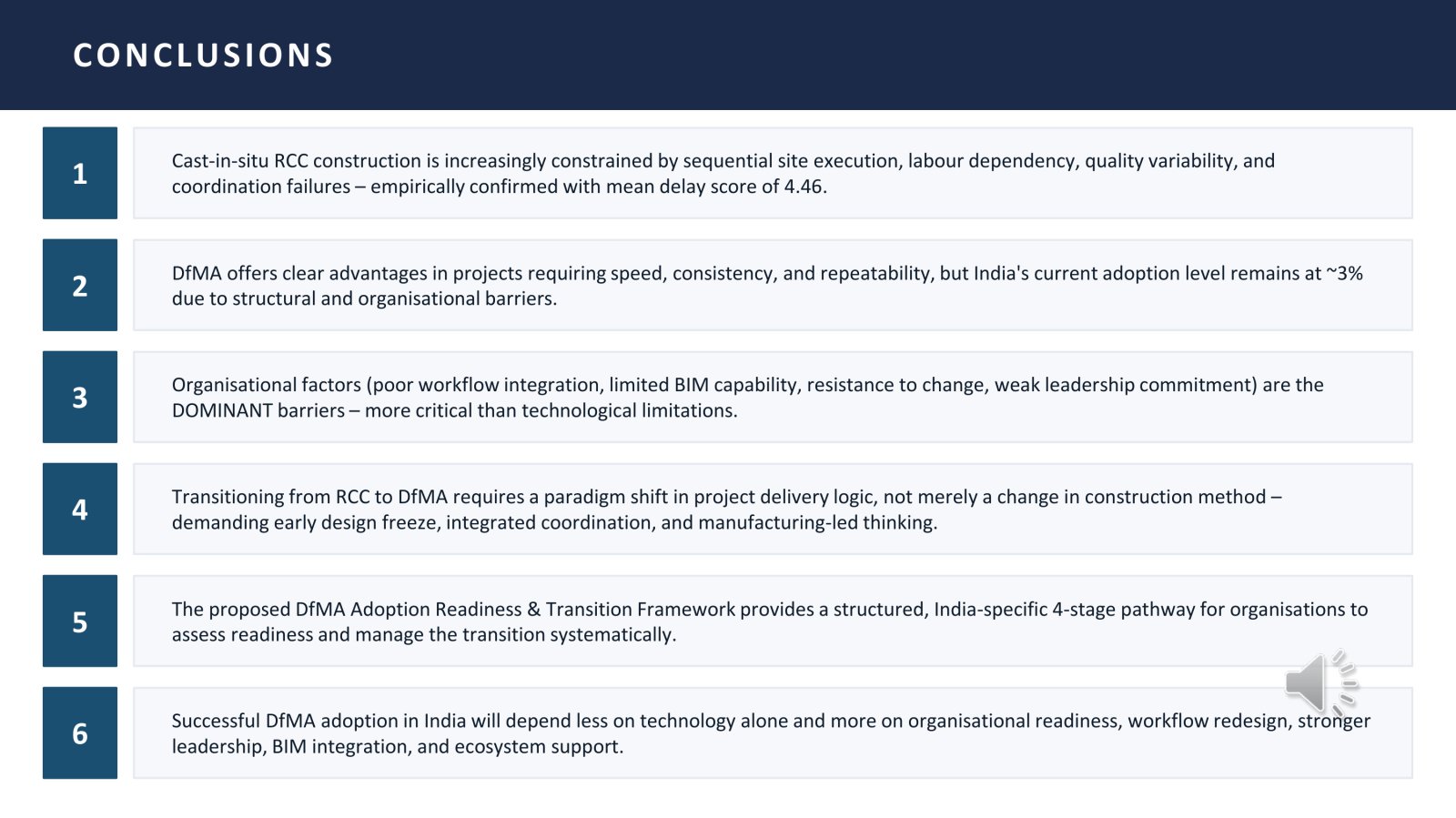
Design for Manufacture and Assembly (DFMA) represents a major shift from labour-intensive, in-situ construction toward industrialised, standardised, and digitally coordinated delivery models. Globally, DFMA encompasses a family of technologies such as precast concrete, 2D panelised and 3D modular systems, light-gauge steel framing (LGSF), prefabricated bathroom/MEP pods, hybrid precast–in-situ systems, and emerging automated fabrication approaches like 3D Concrete Printing (3DCP). These methods promise faster execution, improved quality, better cost predictability, and safer working conditions. In India, however, DFMA adoption remains limited and inconsistent. Despite successful pilots in housing, industrial buildings, and public infrastructure, contractors report barriers such as high upfront cost, limited design integration expertise, supply chain fragmentation, absence of clear regulations, and uncertainty about the business case. Existing adoption studies from Australia, Singapore, China, and Europe classify such challenges using Technology–Organisation–Environment (TOE) frameworks, but India-specific empirical evidence remains scarce. This DRP examines how Indian construction professionals perceive DFMA, what factors influence adoption, and how DFMA would alter day-to-day site workflows. Using interviews, a short survey, and international case reviews, the study aims to develop a practical DFMA Adoption Readiness Framework for contractors.