Your browser is out-of-date!
For a richer surfing experience on our website, please update your browser. Update my browser now!
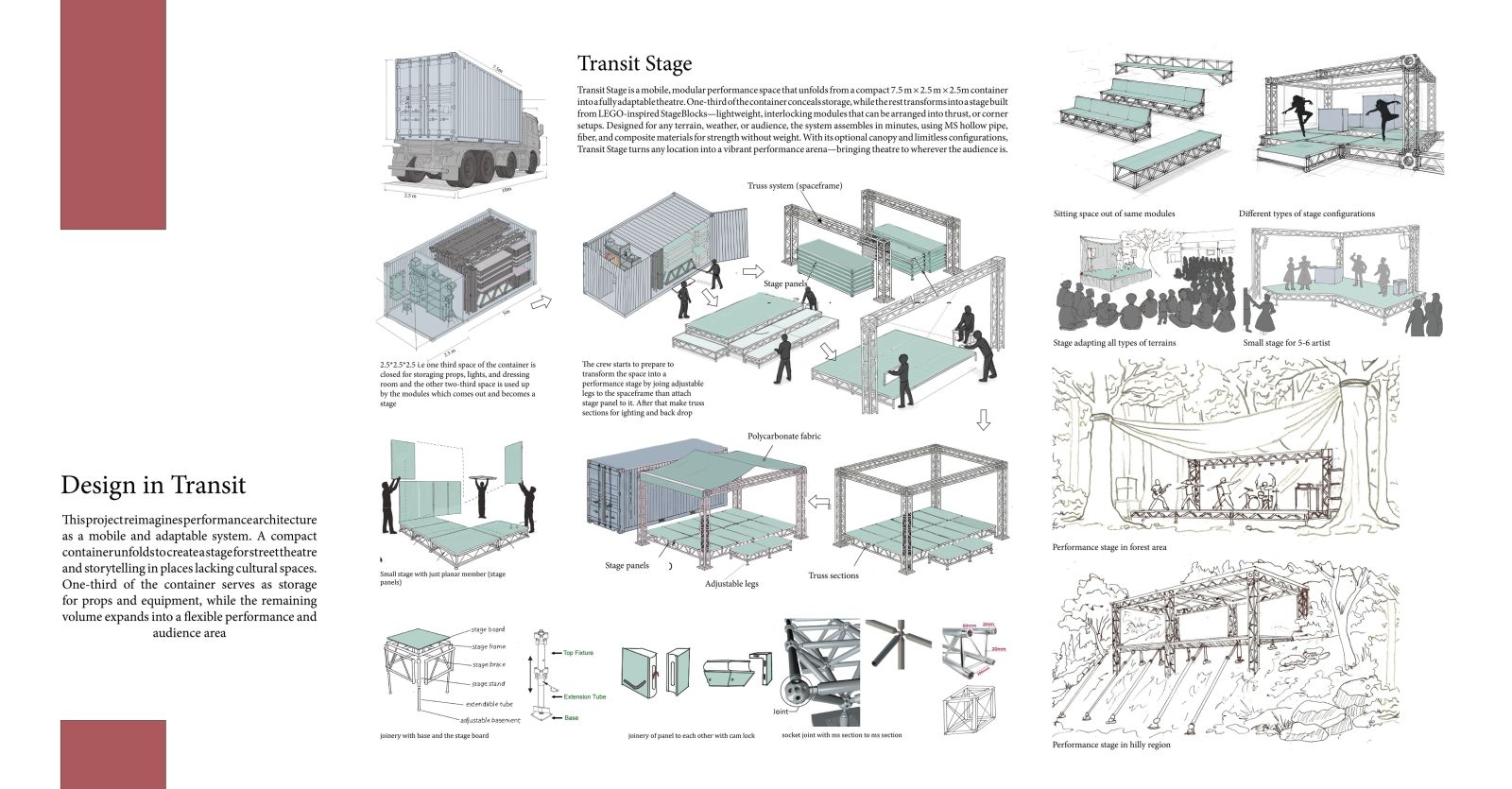
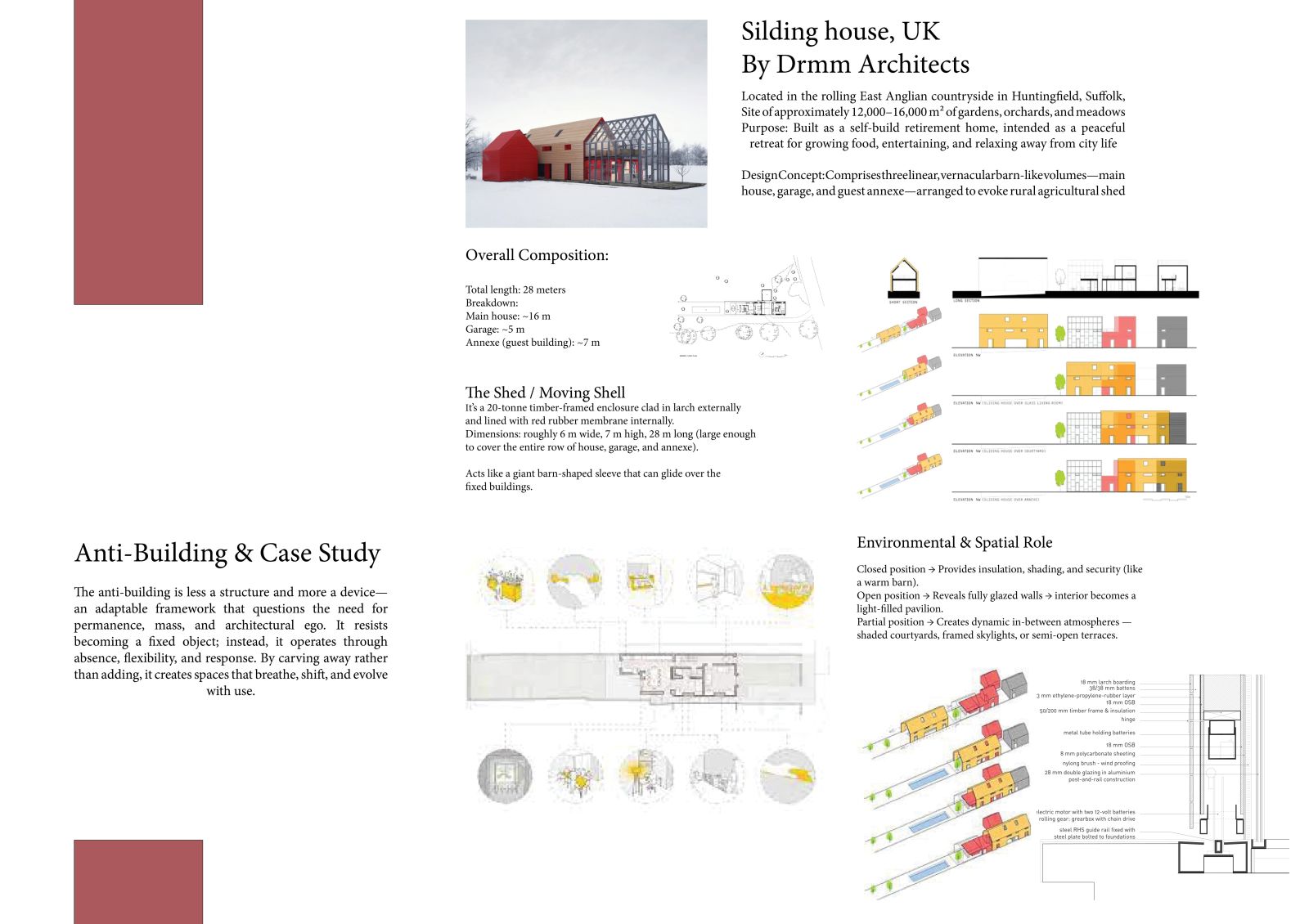
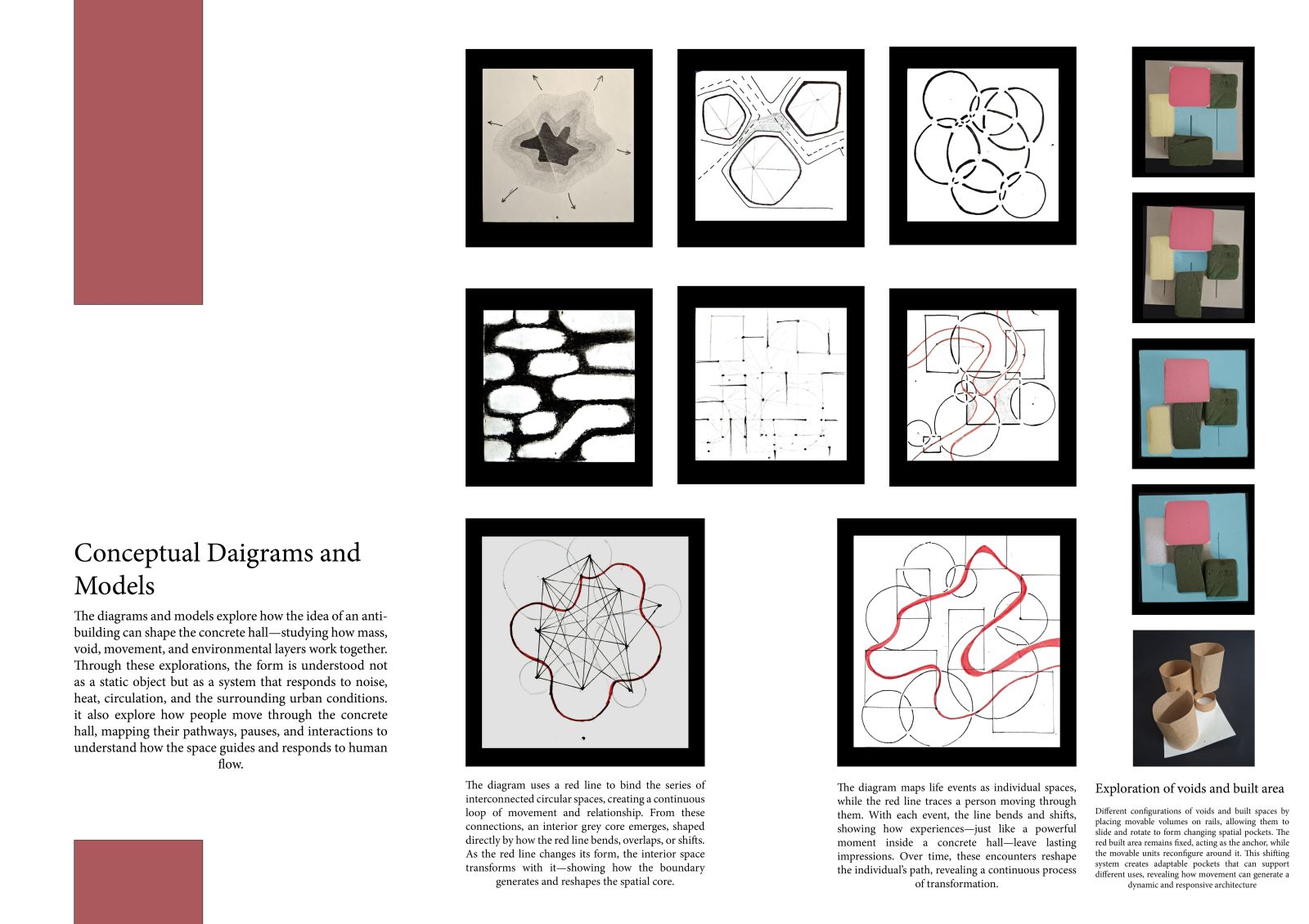
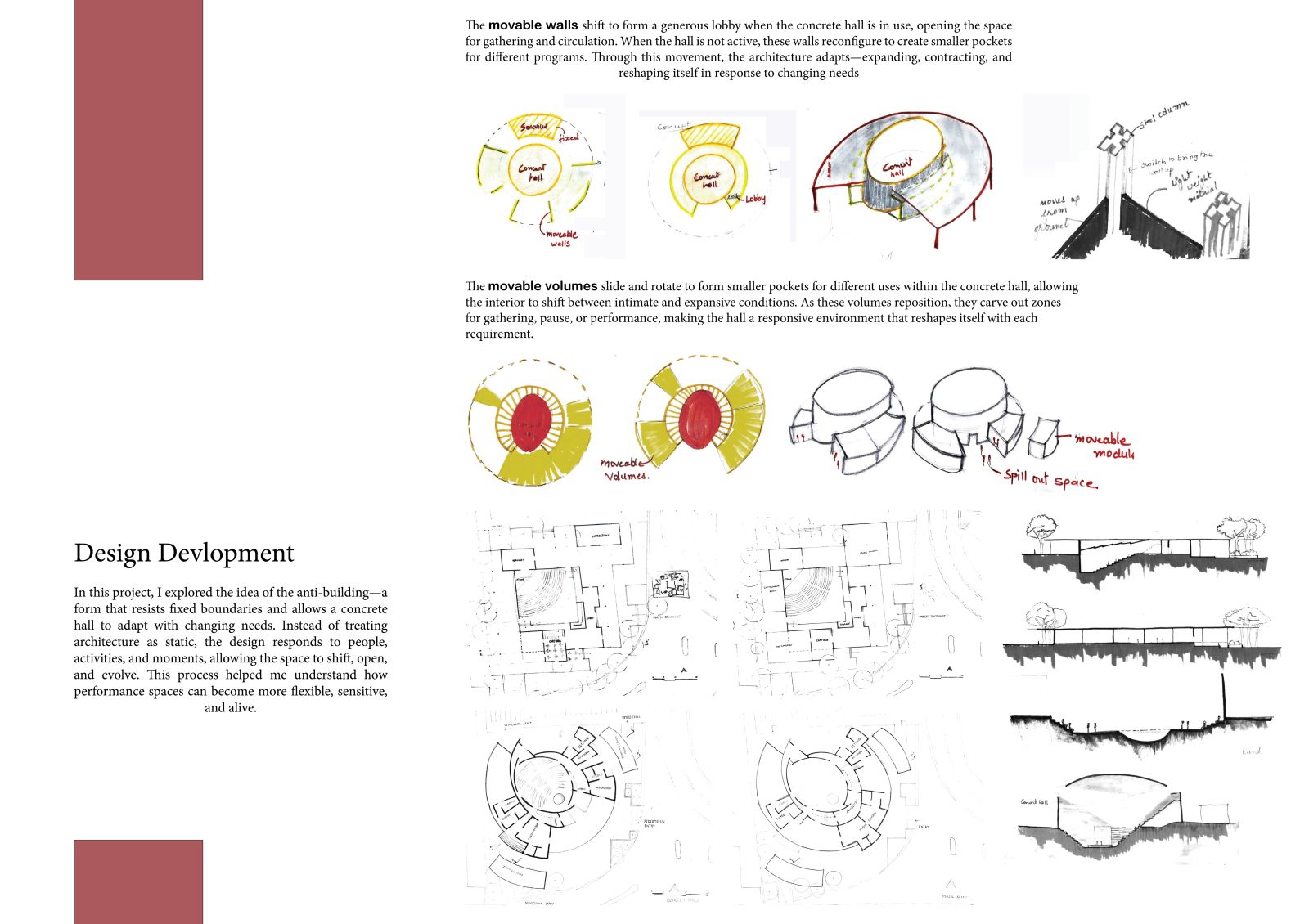
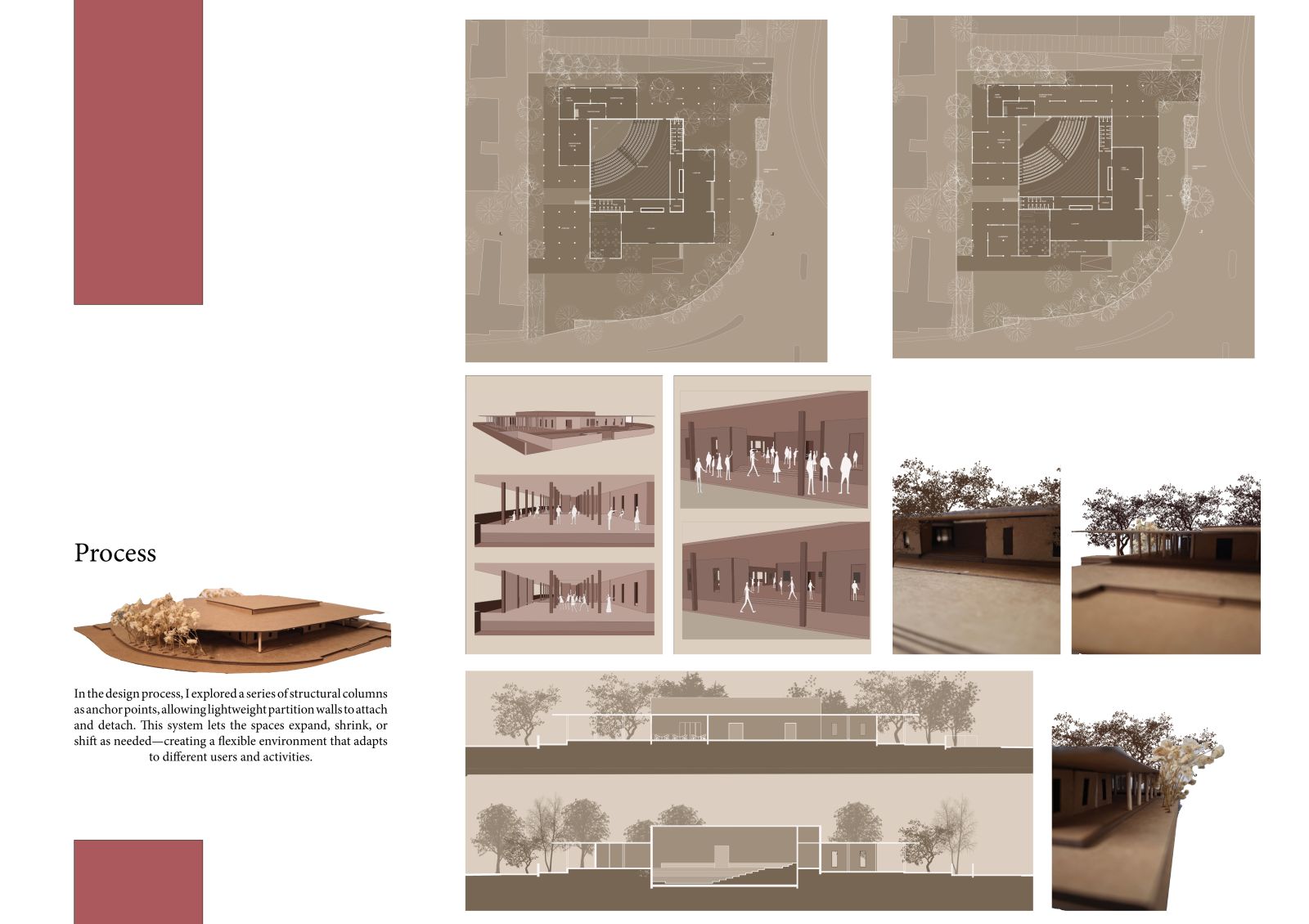
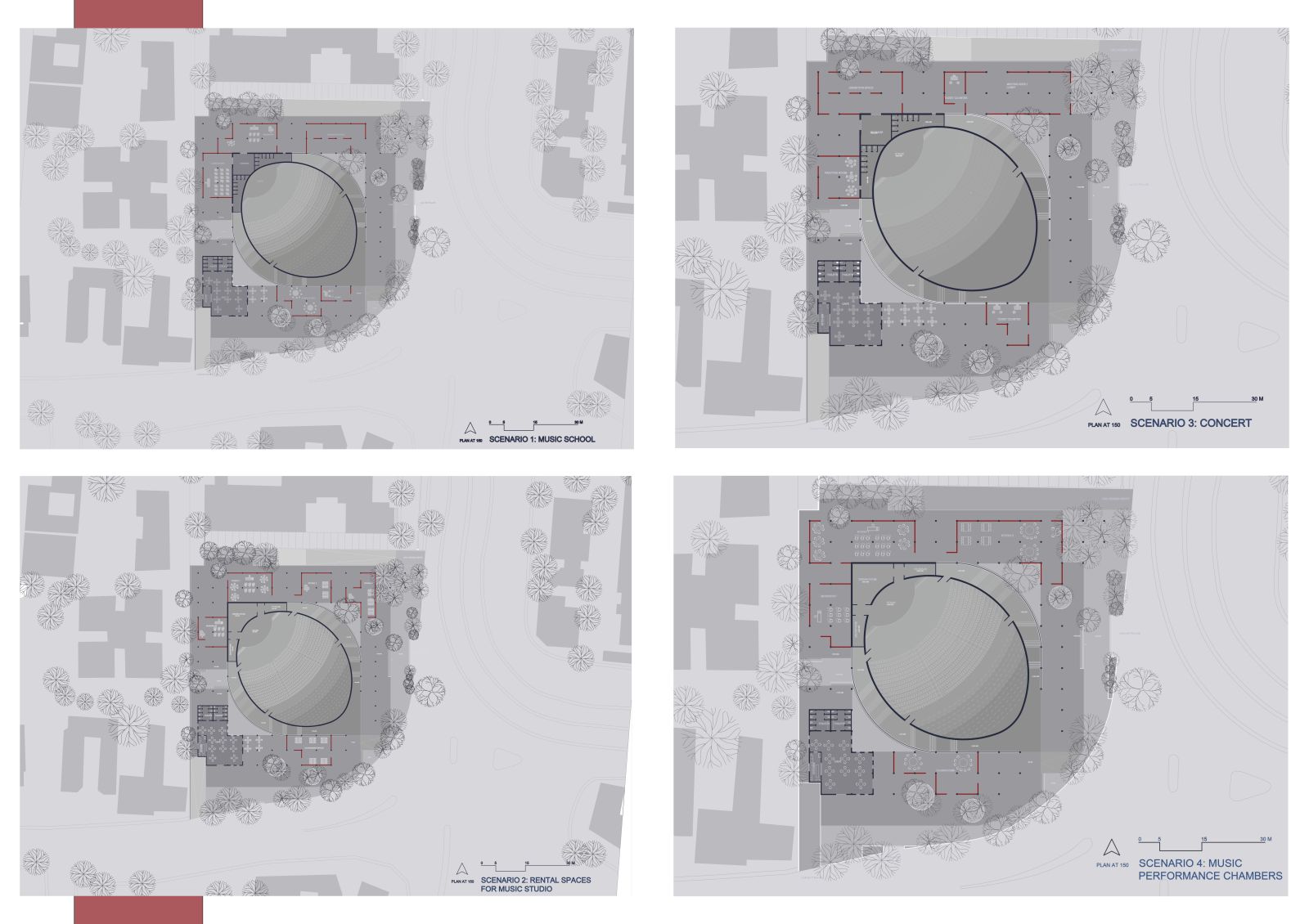
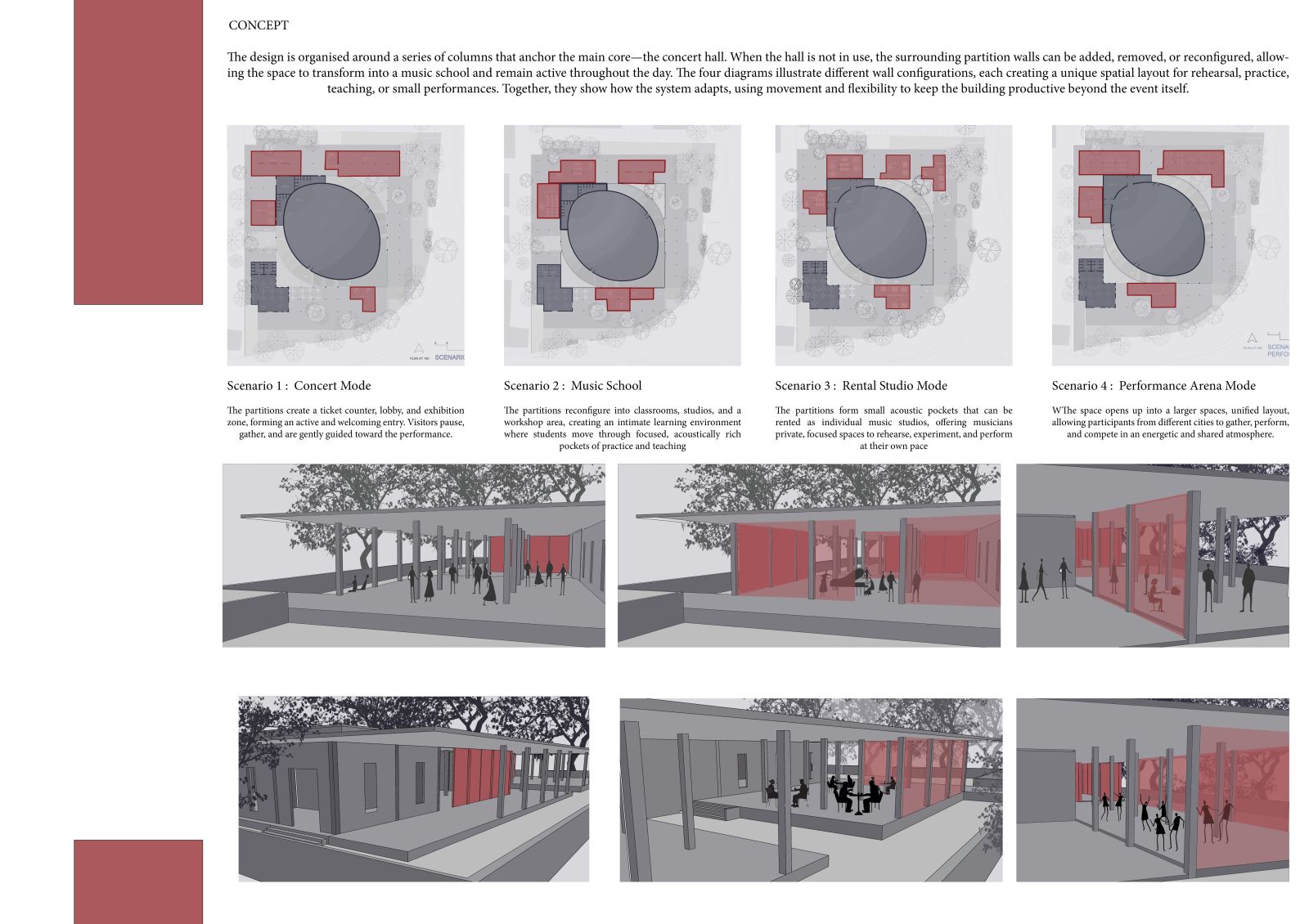
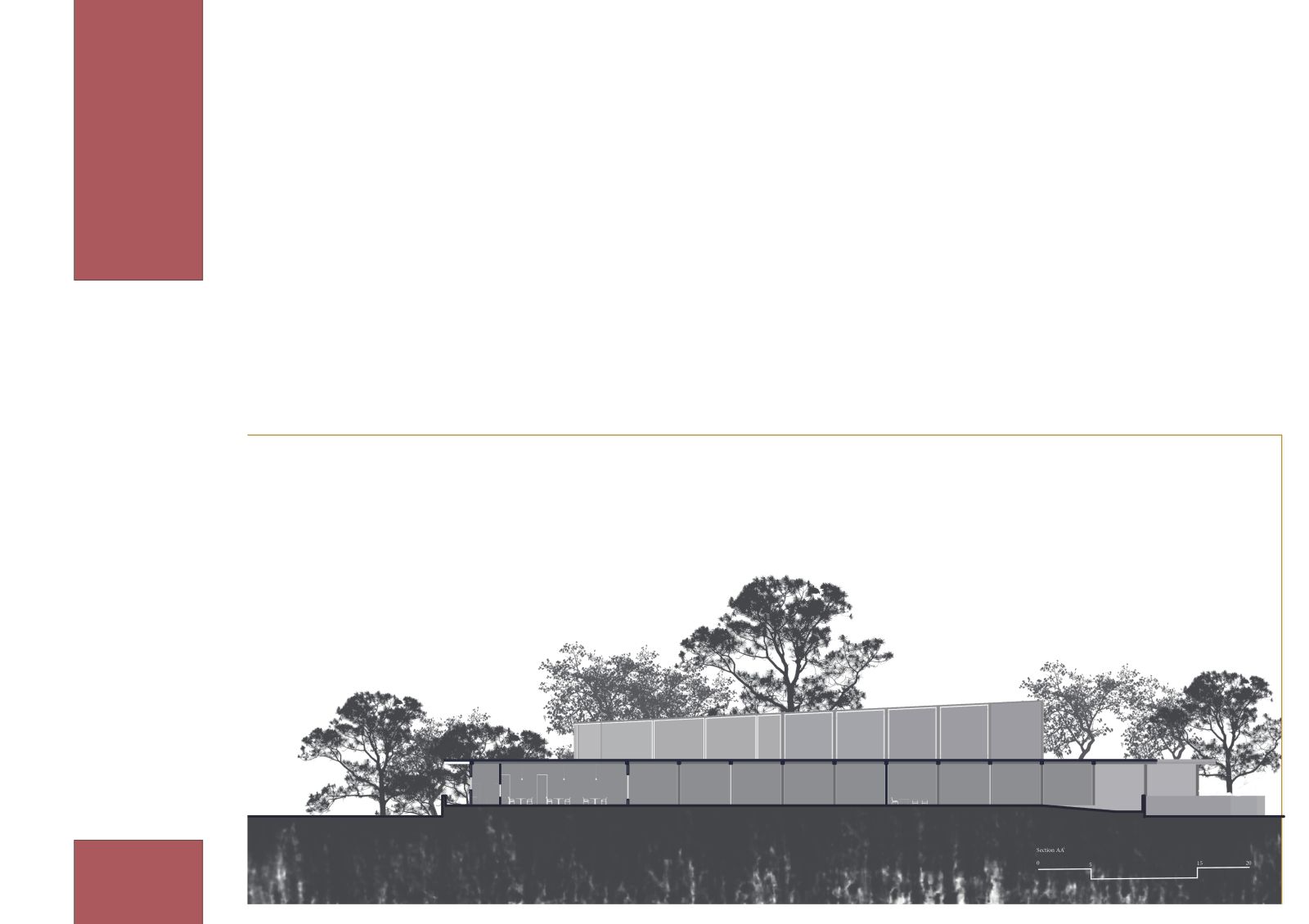
The idea begins with a refusal—an architecture that chooses lightness over mass, openness over enclosure. This anti-building does not stake its claim on the ground; instead, it behaves like a shifting presence. It absorbs movement, listens to its surroundings, and changes shape rather than resisting change. It becomes a place that is always becoming, never fixed. At the heart of the project, the concert hall remains a fixed and steady core, while a ring of structural columns around it becomes the infrastructure for transformation. These columns act as anchor points for lightweight partitions—walls that can attach, detach, or reposition themselves based on the program, allowing the interior to expand, fragment, or merge based on need. The architecture functions like a spatial instrument—capable of generating multiple layouts for performances, gatherings, workshops, or small moments of pause. On ordinary days, this adaptable zone morphs into rehearsal rooms, classrooms, workshops, or small exhibition pockets. The service core, backstage areas, and storage remain permanent, supporting everyday activity. When it is time for a performance, the partitions are removed, and the surrounding area becomes an expanded circulation and gathering space connected seamlessly to the main hall. The result is a building that never stays idle—its spaces constantly engaged by students, performers, and visitors. reshaping itself to support learning, practice, display, and performance. Flexibility emerges not as an afterthought but as the central operating principle. As the walls shift, the experience of the space shifts with them. Paths open and close, sightlines change, pockets of intimacy appear, and larger volumes unfold. The user becomes aware of a living architecture—one that adapts to their presence, invites participation, and reveals its character through movement and transformation.
View Additional Work