Your browser is out-of-date!
For a richer surfing experience on our website, please update your browser. Update my browser now!
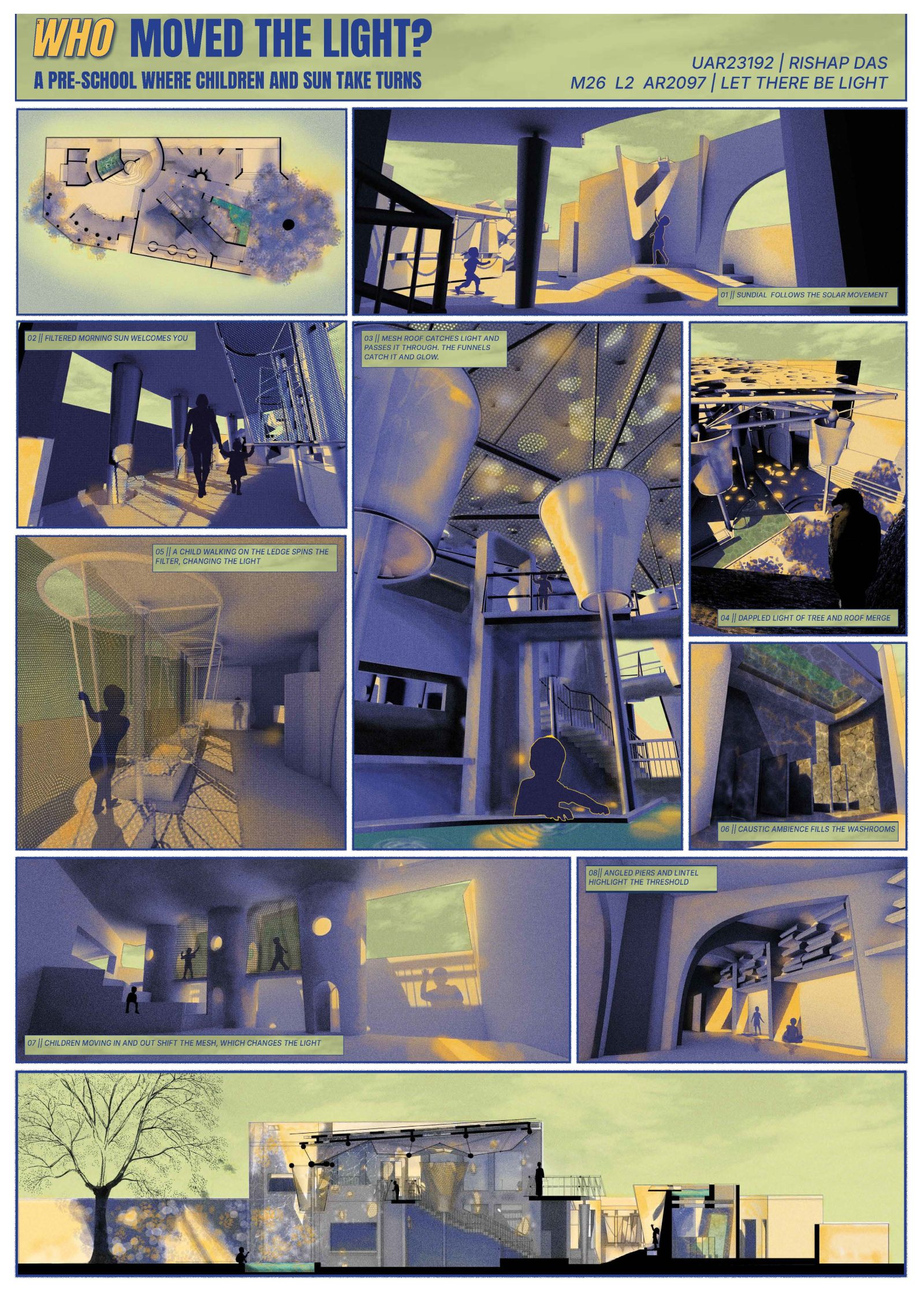
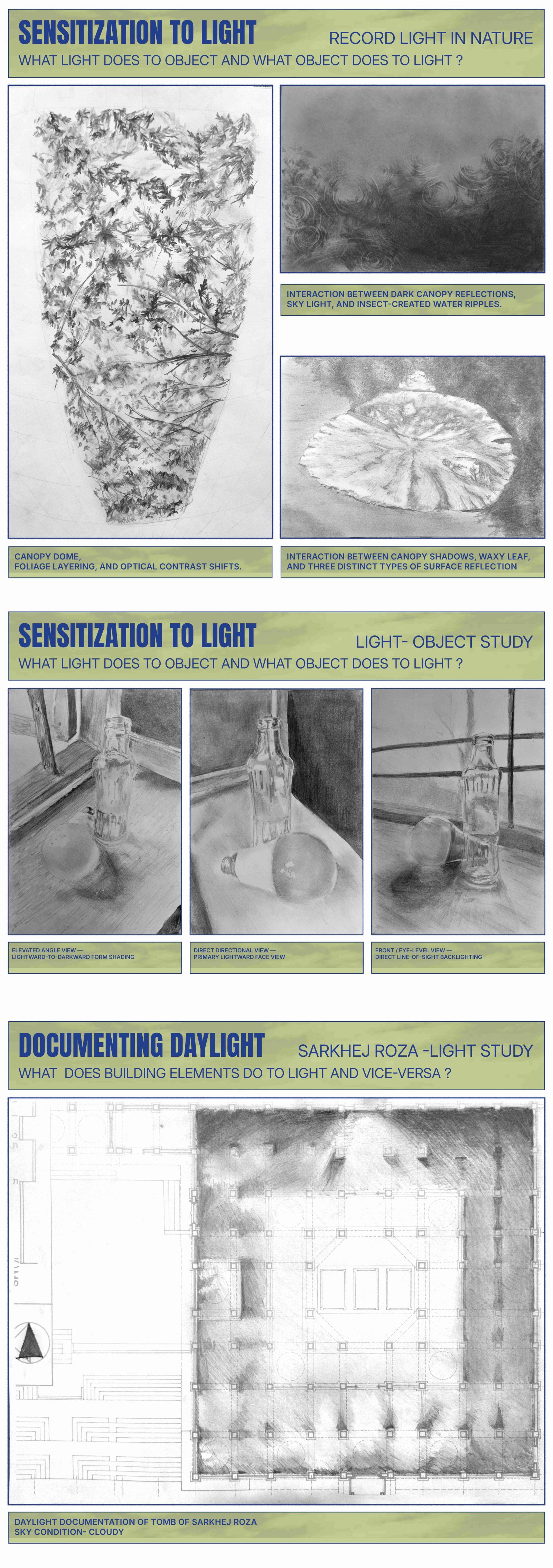
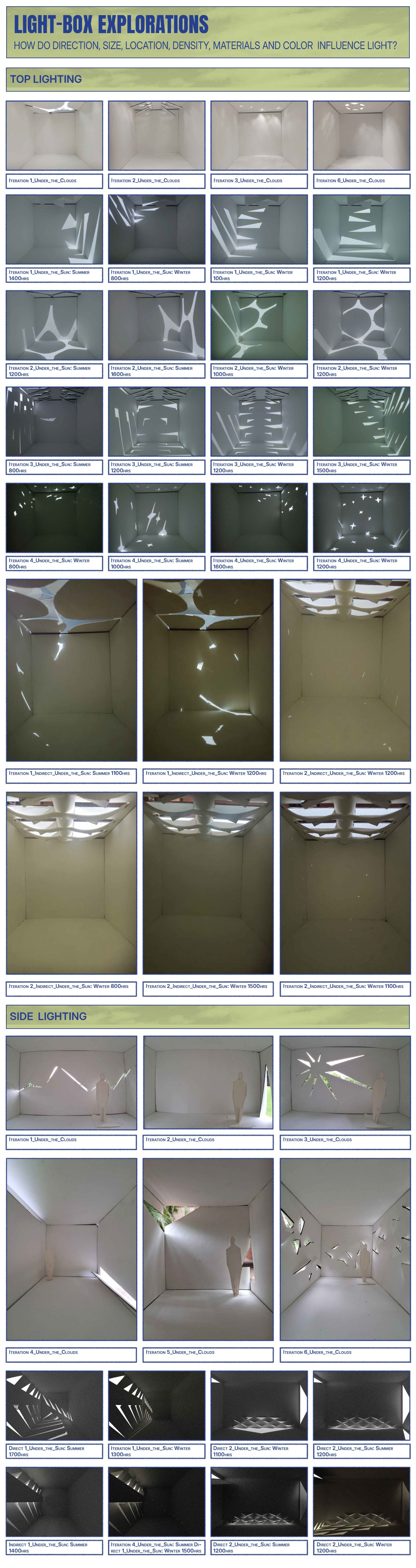
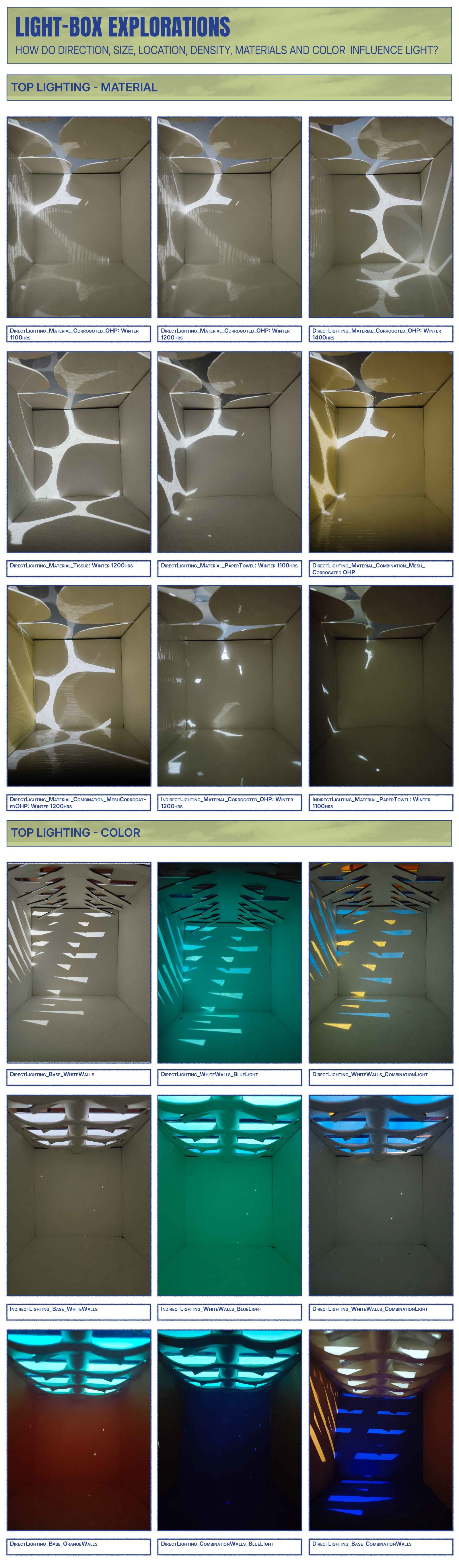
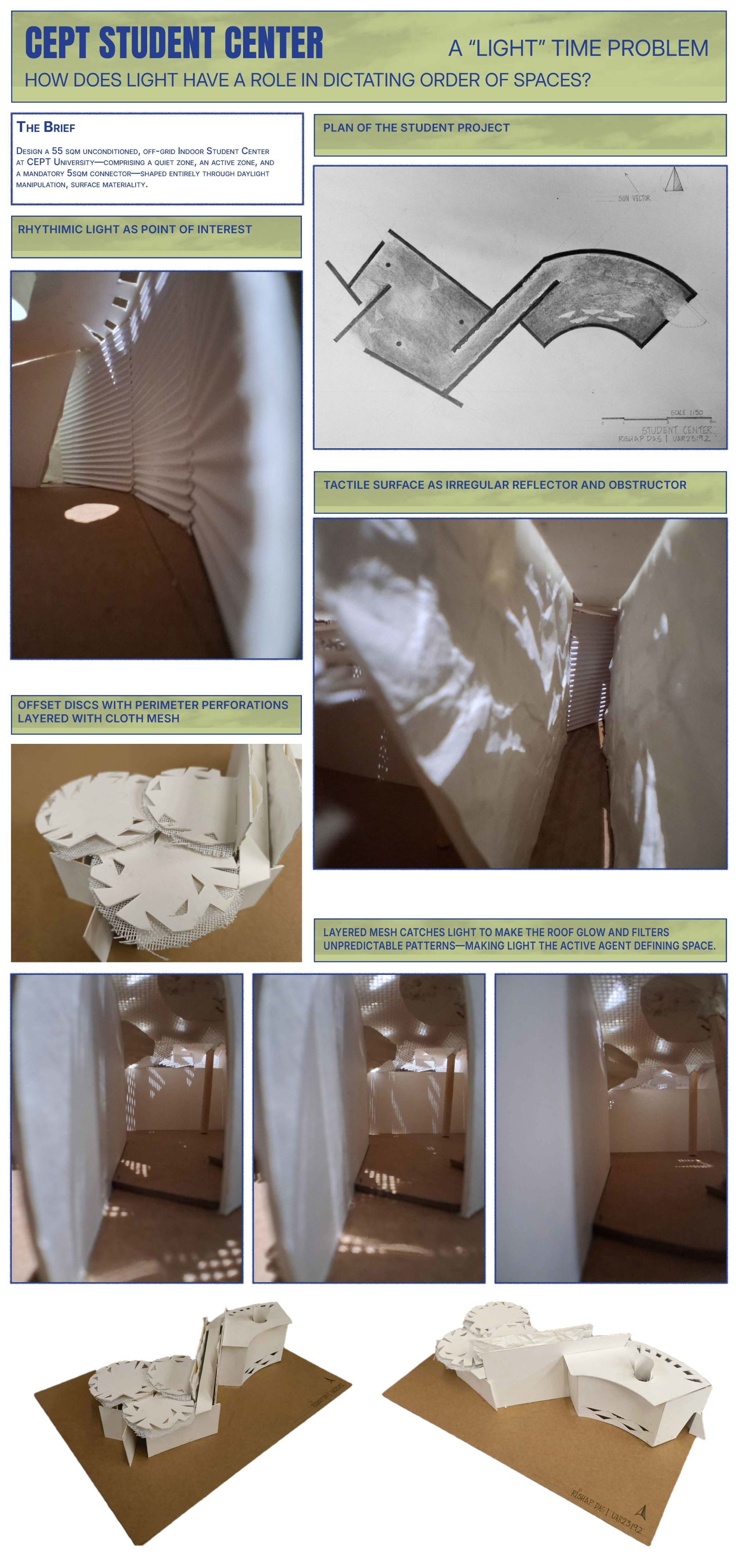
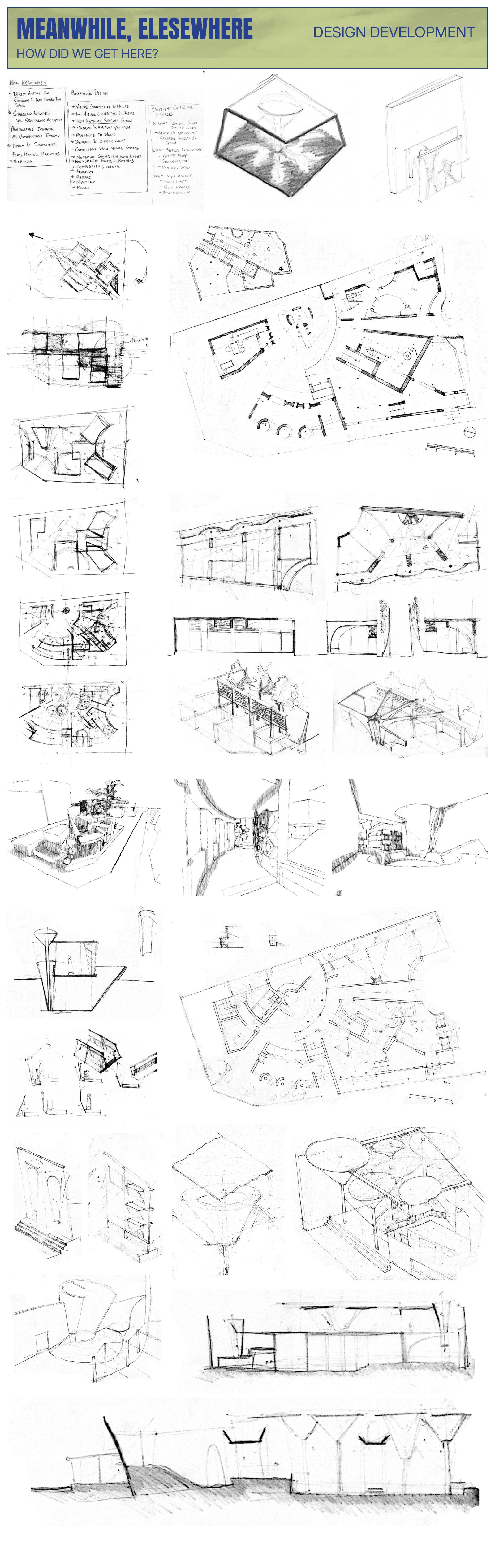
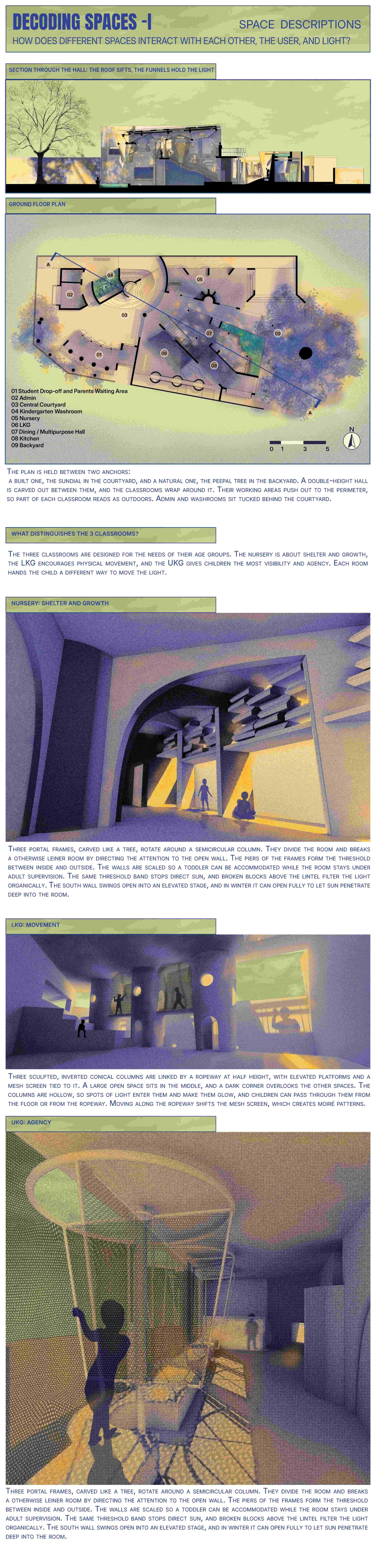
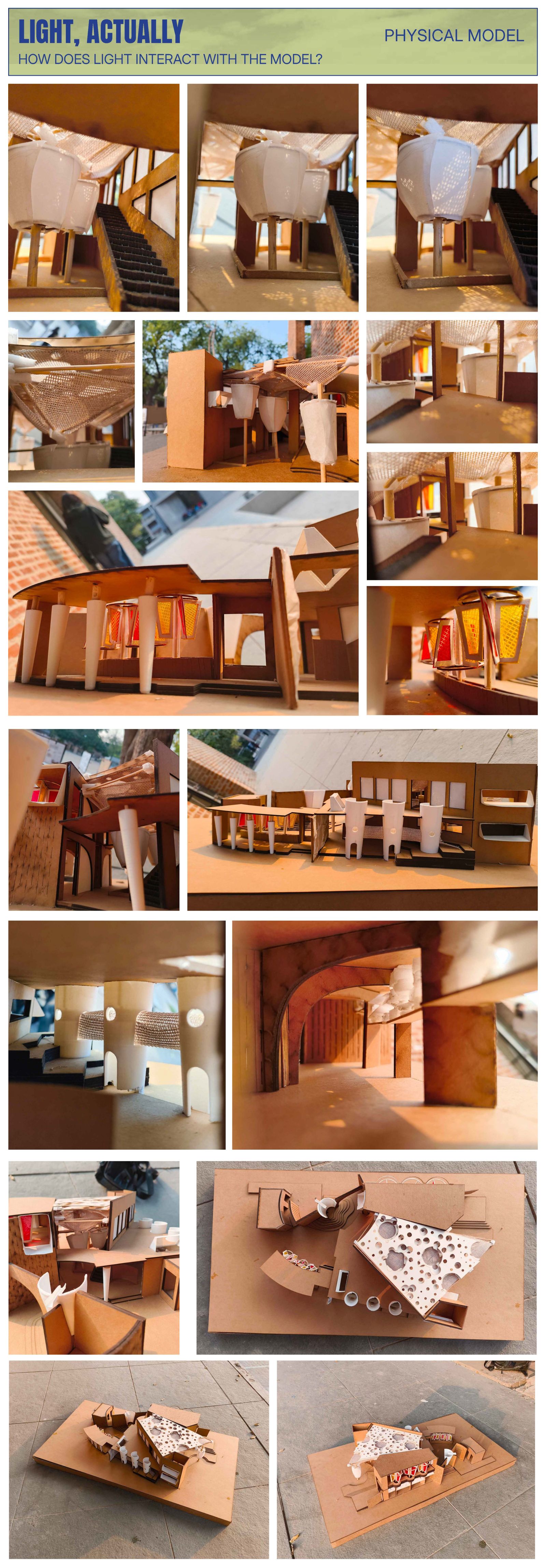
Children rarely accept a spoken answer. They put things in their mouths, push, climb and squeeze, because they learn by testing the world with their bodies. A child learns as an active manipulator of space, not a passive user of it. That raises a question for architecture: can a space be dynamic, and if so, what makes it so? This project answers through light. It asks who, or what, actually changes the light, in both quantity and quality, and how that can support a curious child spending a long stretch away from home for the first time. The design experiments with stretching, shifting and rotating overlapped mesh surfaces. Together they form moiré patterns, both as a visible screen in front of the light and as a medium that casts filtered shadow. Offset layers of perforation at different scales then imitate dappled light, and the sun's movement and its interaction with the building elements keep the pattern changing.
View Additional Work