Your browser is out-of-date!
For a richer surfing experience on our website, please update your browser. Update my browser now!
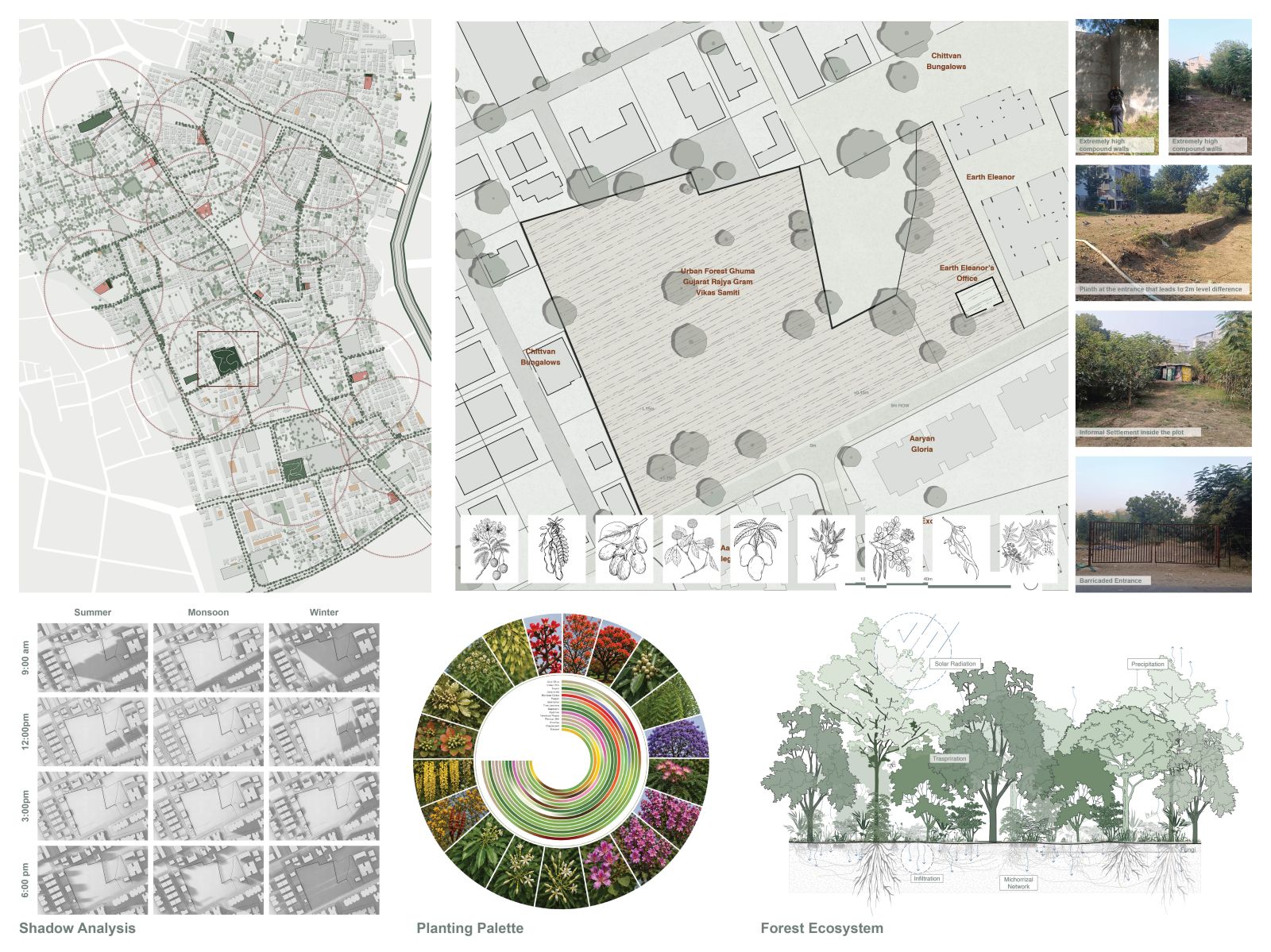
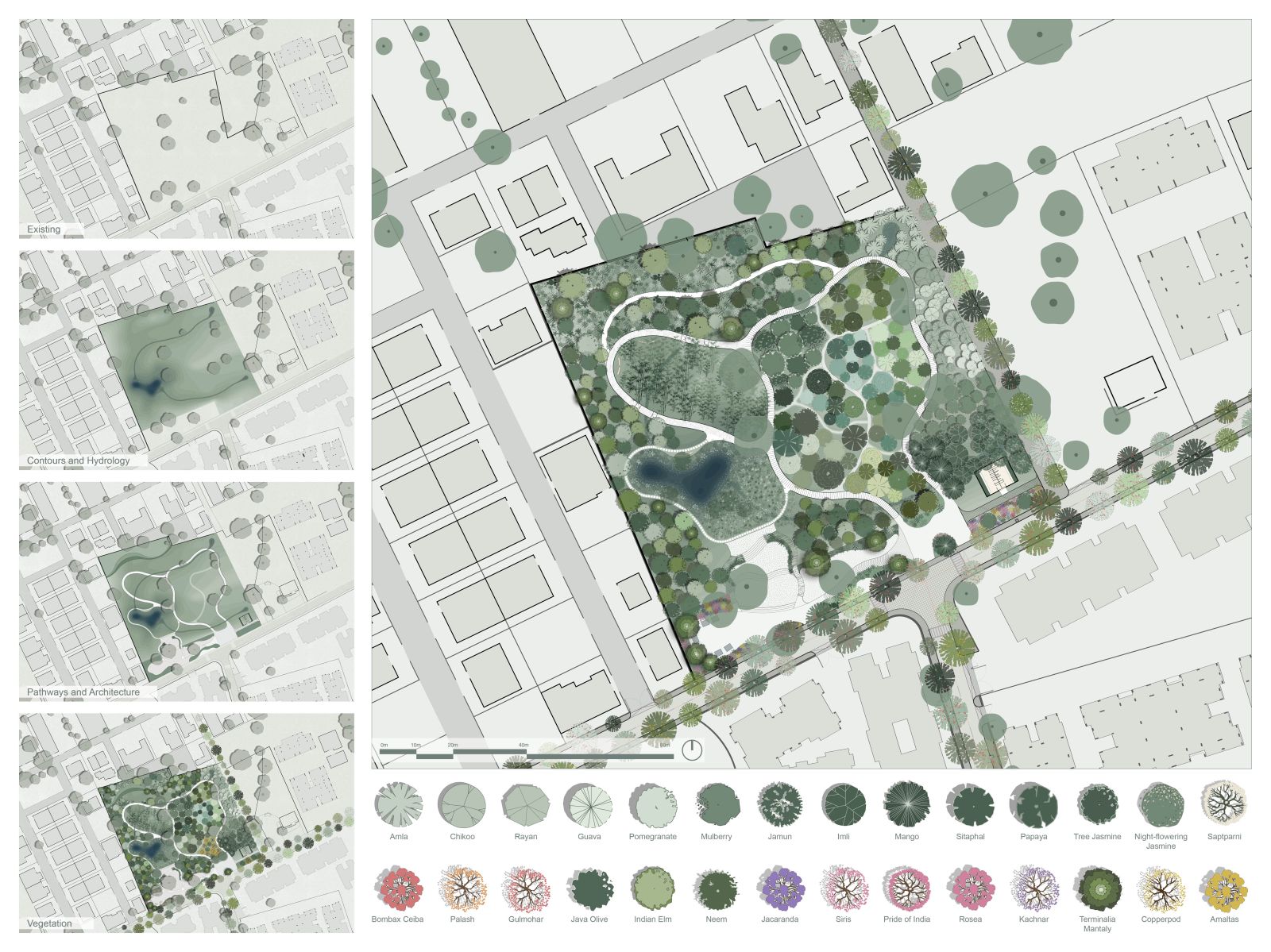
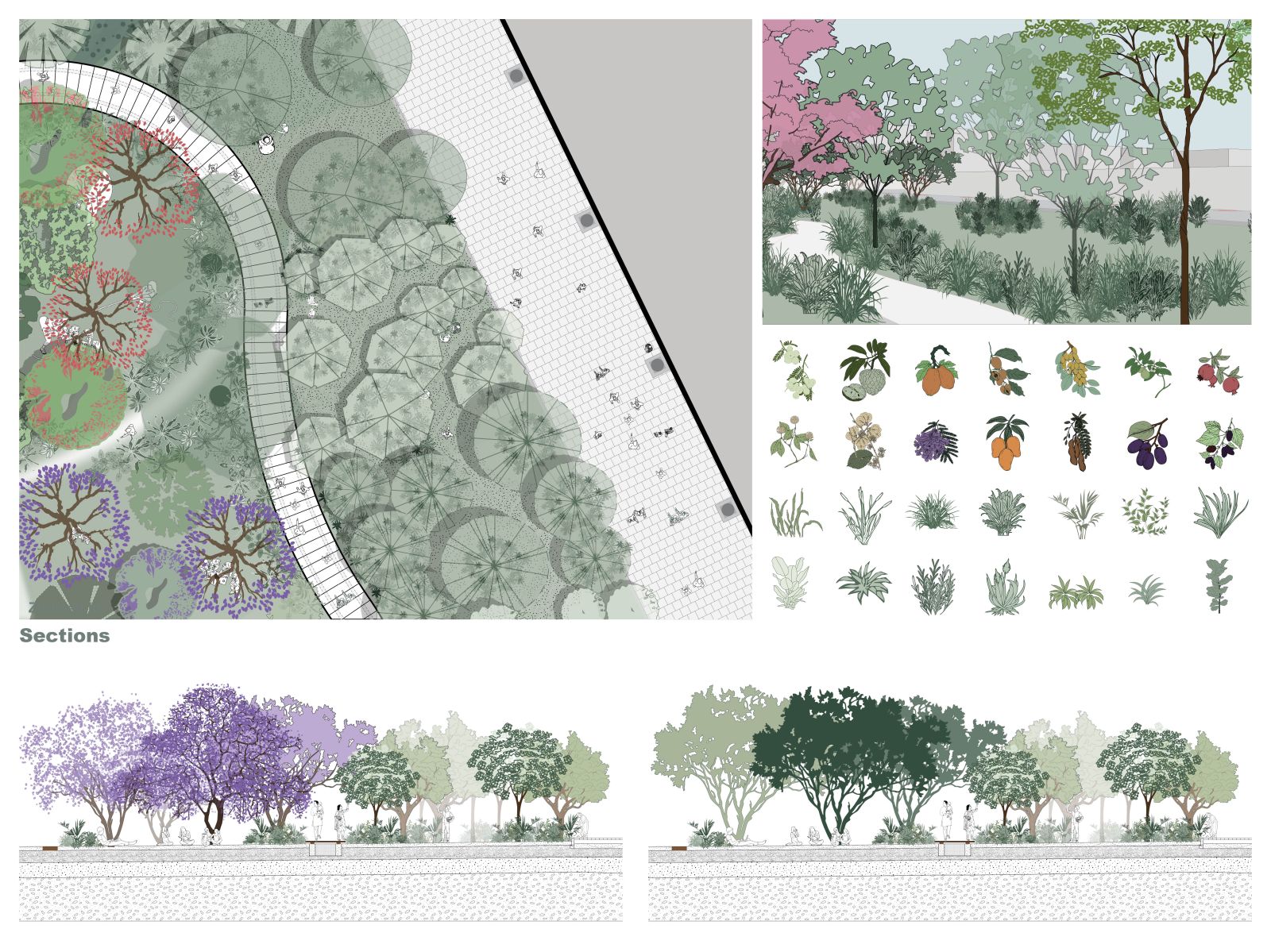
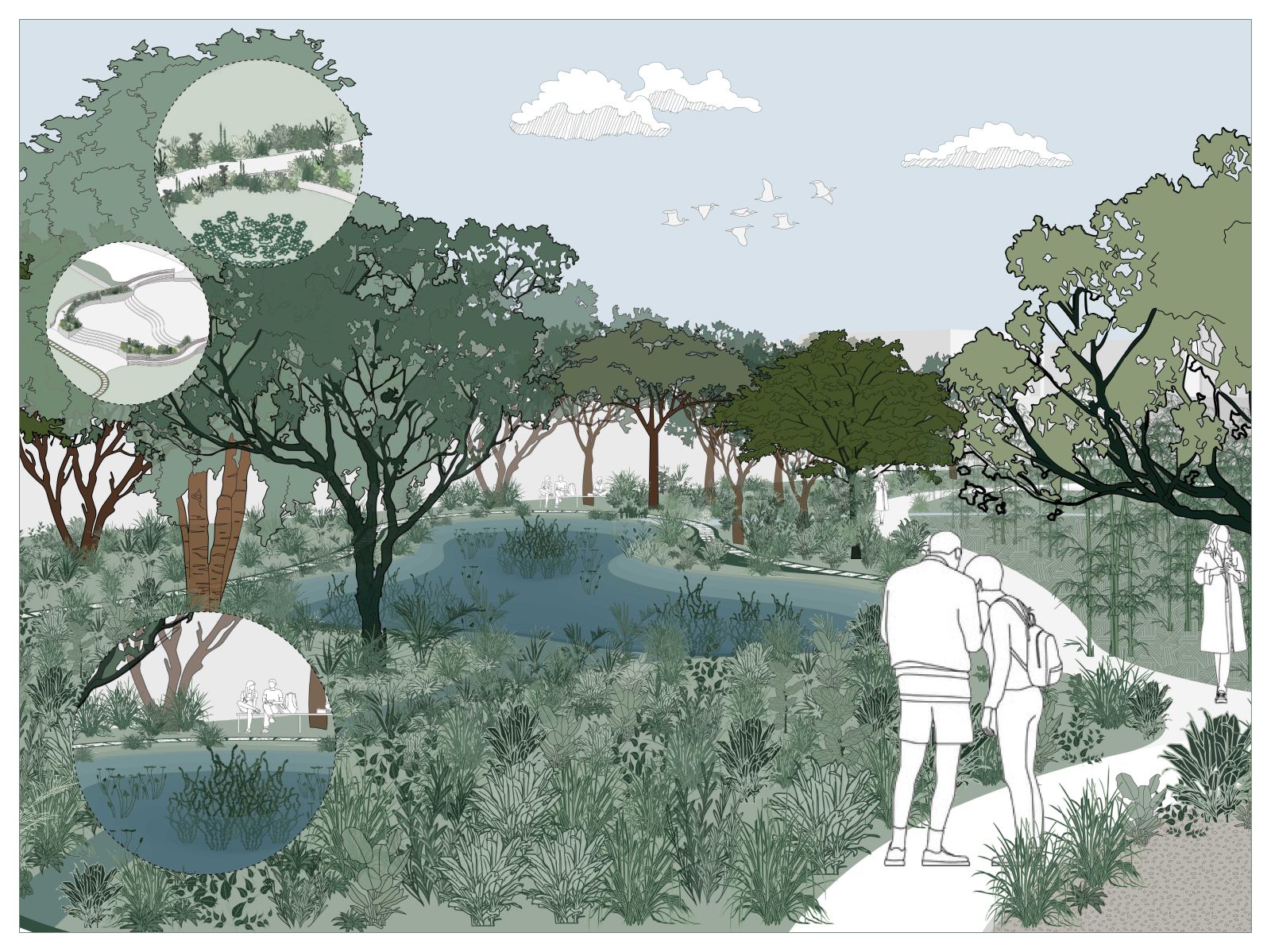
Located in Bopal in Ahmedabad, this 10,000 sq.m. site will be a vital breathing space within a rapidly densifying residential fabric. Conceived as an urban forest park within the TP framework, RituVan foregrounds native and climate-responsive ecologies through layered planting systems of canopy trees, understory shrubs, grasses, and seasonal ground covers. Organized through a grid matrix, each landscape cell establishes distinct seasonal moods, sensory conditions, and microhabitats that evolve through flowering, fruiting, shedding, and monsoon cycles.
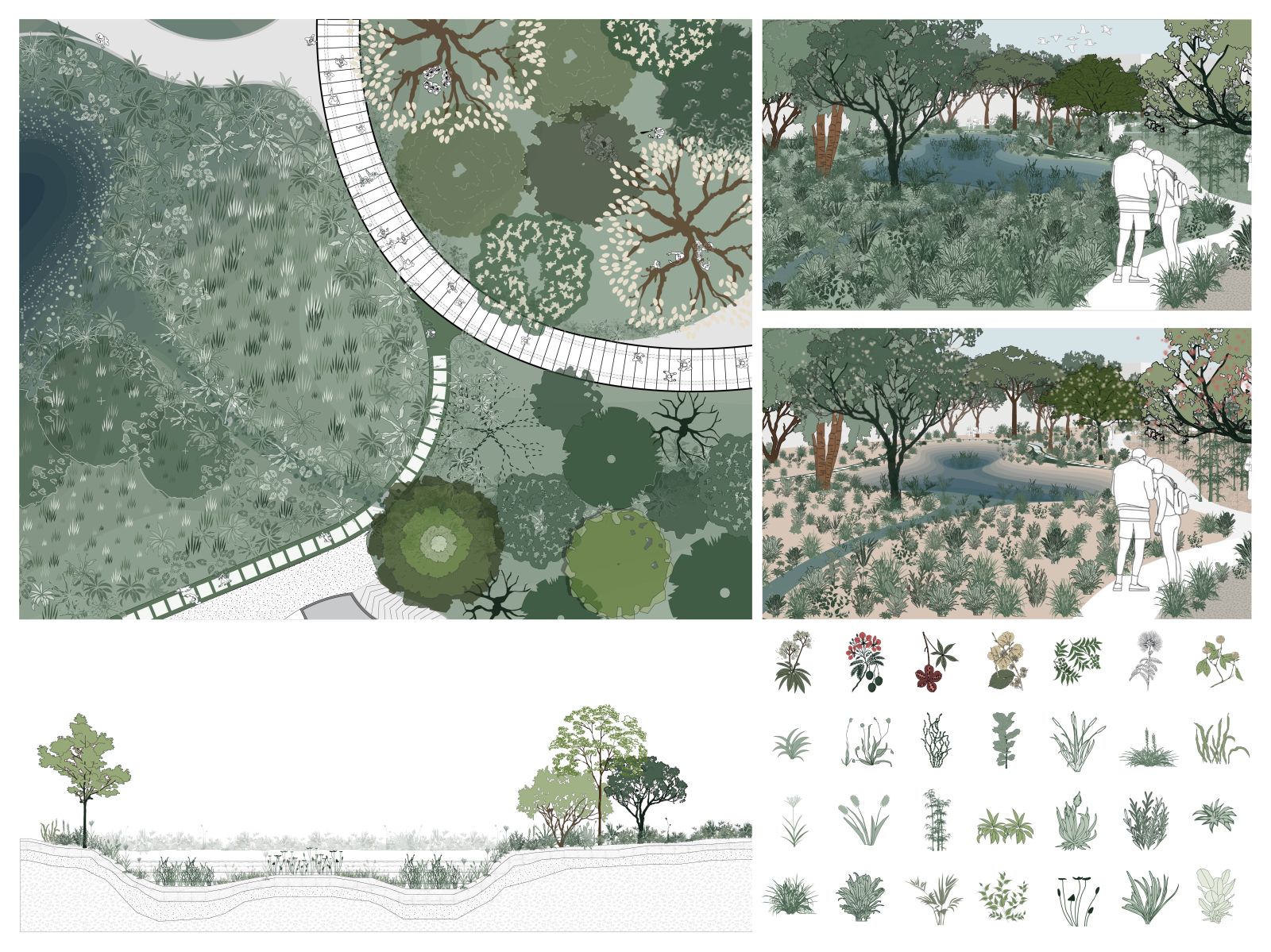
Water forms an important ecological layer through bioswales, detention depressions, permeable surfaces, and seasonal wet zones that slow runoff and support groundwater recharge. Trails move through shaded planting, bamboo groves, and water-retaining landscapes, creating gradual sensory transitions across the site. A roadside cafe and public edge anchor everyday neighborhood use, allowing the landscape to evolve through changing ecologies, seasonal rhythms, and everyday occupation over time.
Link for Booklet