Shaikh Yasira Md Saeem

UR3015

The Living Basin

Set within the industrial landscape of Vastral in Ahmedabad, The Living Basin reimagines a degraded and depleted lake edge into an ecologically regenerative public landscape. As impermeable surfaces continue to increase across the city, resulting in flooding, heat buildup, and reduced groundwater recharge, the project positions the site as a living sponge capable of absorbing local hydrological shocks. Through systems of retention, filtration, and percolation, the revitalized waterbody captures and stores surface runoff while supporting cooler microclimates within the surrounding industrial fabric. Layered native planting creates shaded habitats that support biodiversity and seasonal change while remaining resilient to Ahmedabad’s semi-arid climate. Subtle landform variations and water-retaining landscapes generate diverse spatial and ecological conditions across the site. Integrating blue-green infrastructure with everyday public use, the project creates a restorative urban refuge where water, ecology, and public life become closely interwoven. 

View Additional Work
Report Content

Visualizing the sensory shift from impermeable grey to regenerative green.Where there was once runoff and degradation, The Living Basin introduces a choreographed sequence of filtration and shade: turning a hydrological liability into an ecological asset .

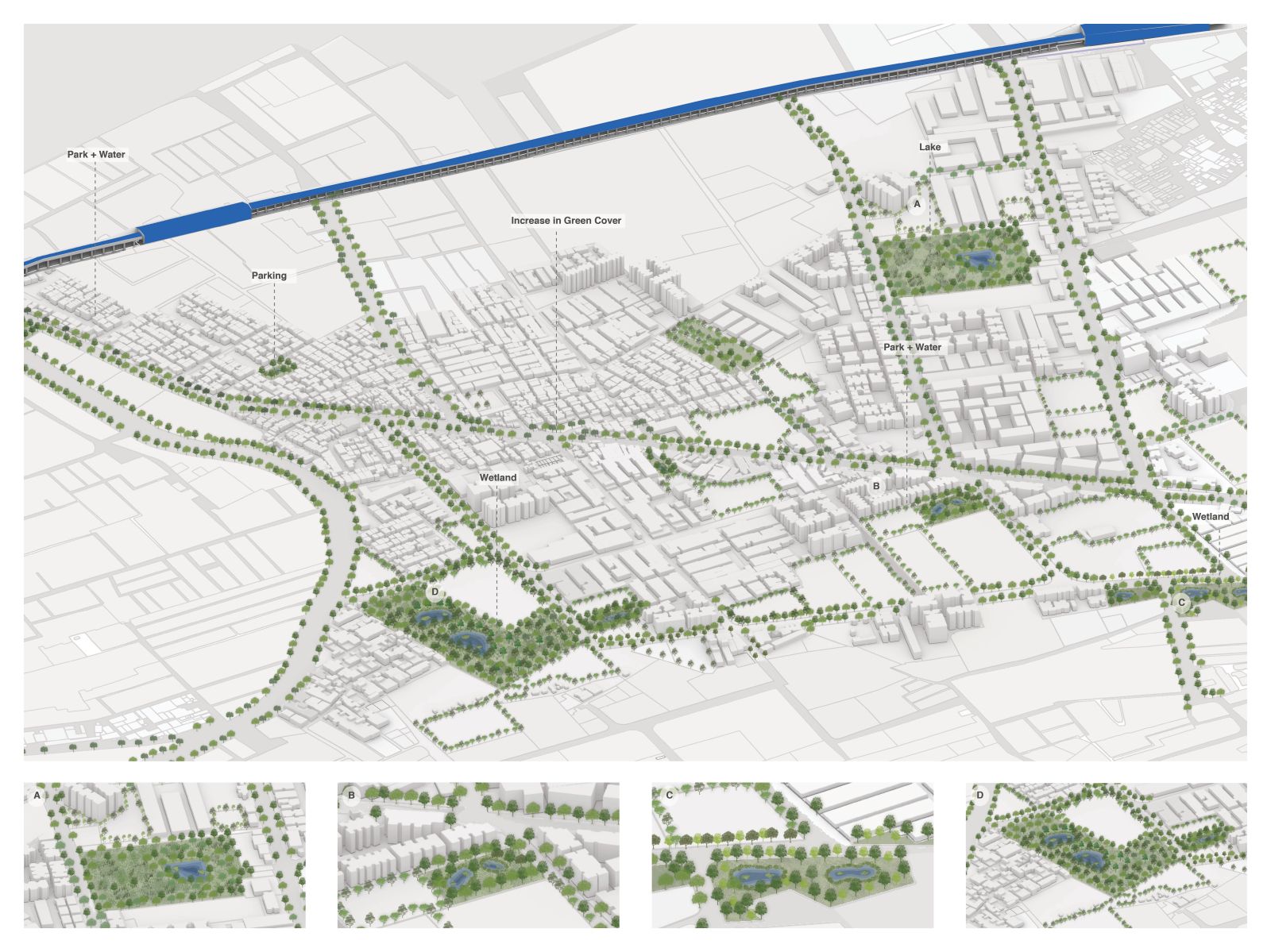
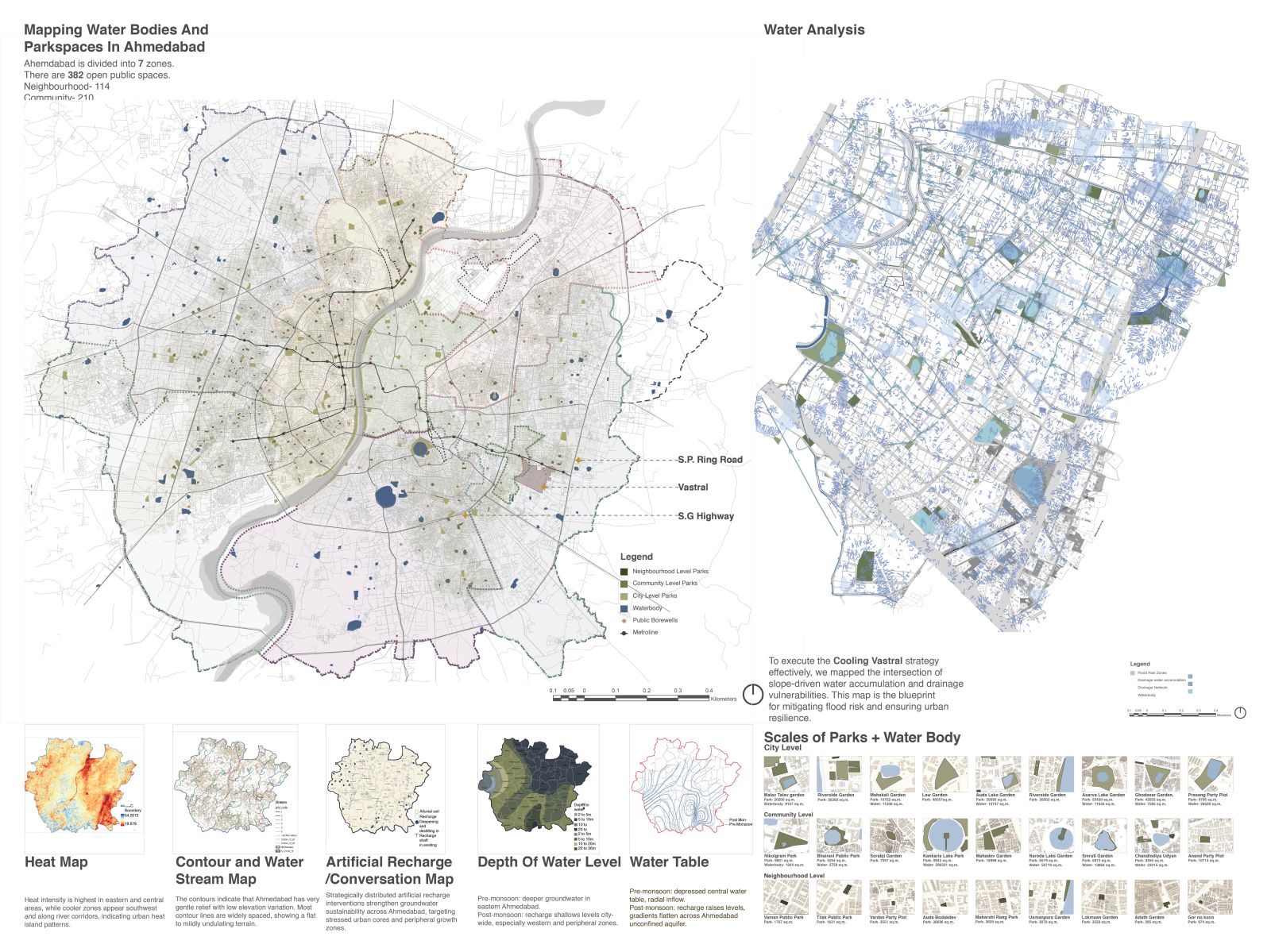
A multi-scalar mapping of Ahmedabad’s hydrological and open-space networks. This study deciphers the intersection of water systems, land use, and urban density to unlock regenerative opportunities within Vastral’s industrial fabric.

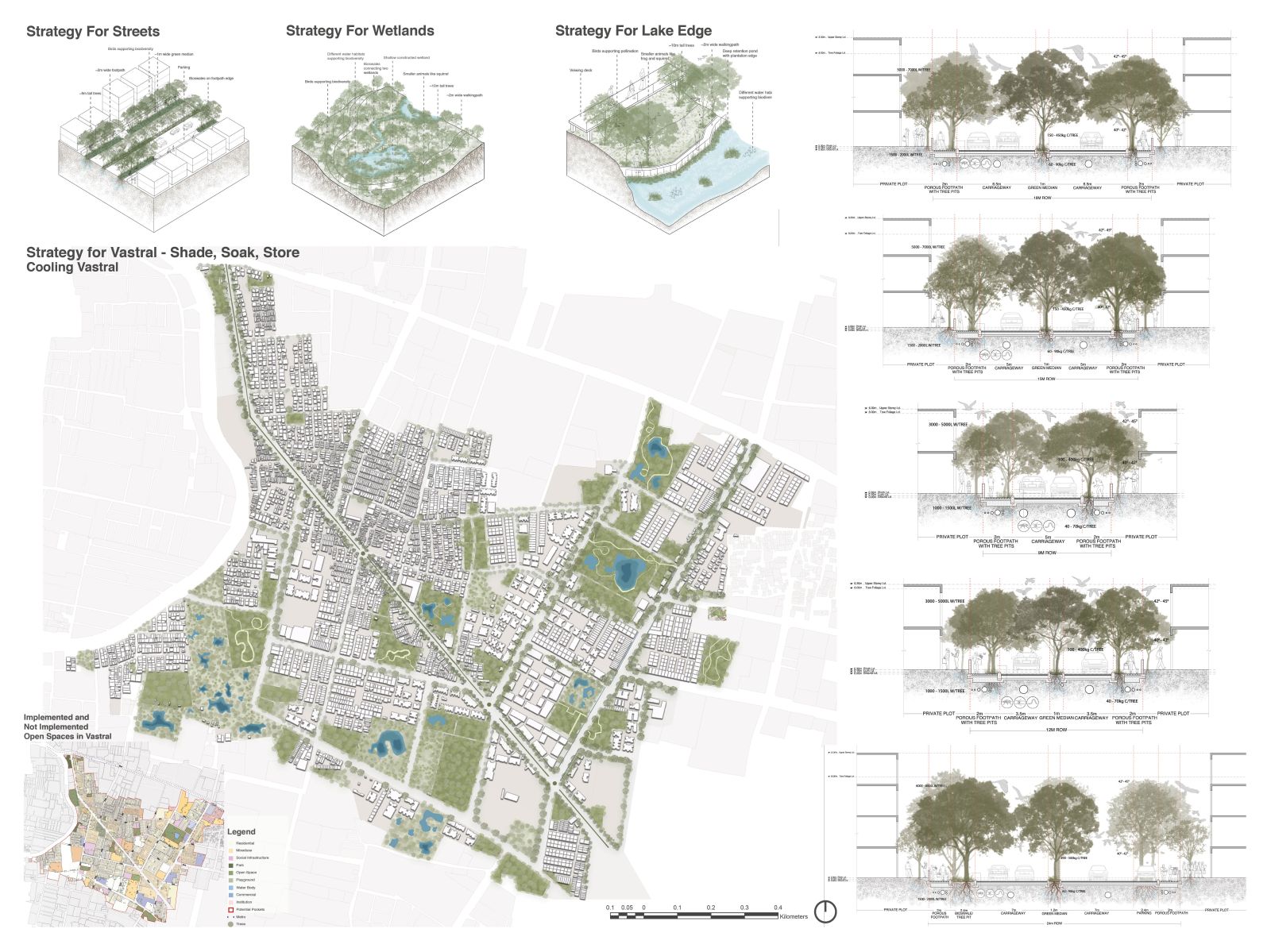
Shade, soak, and store —A systemic blue-green intervention designed to recalibrate Vastral’s industrial grain. This strategy converts fragmented streets and neglected voids into a high-performance network of thermal buffers, hydrological sponges, and biodiverse corridors.

Cooling Vastral through a connected landscape of soaking, storing, and shading that transforms stormwater into ecology, comfort, and public life.

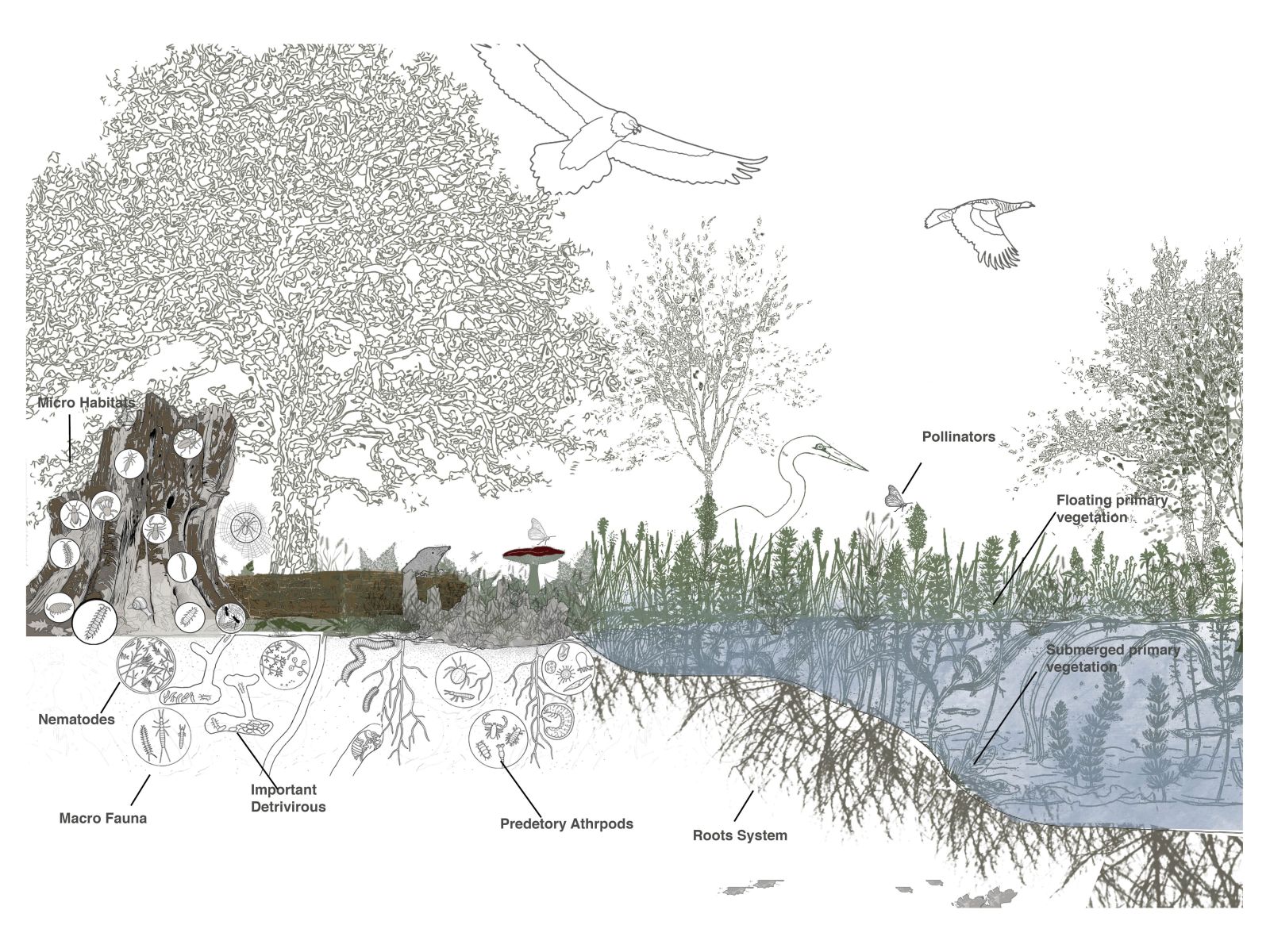
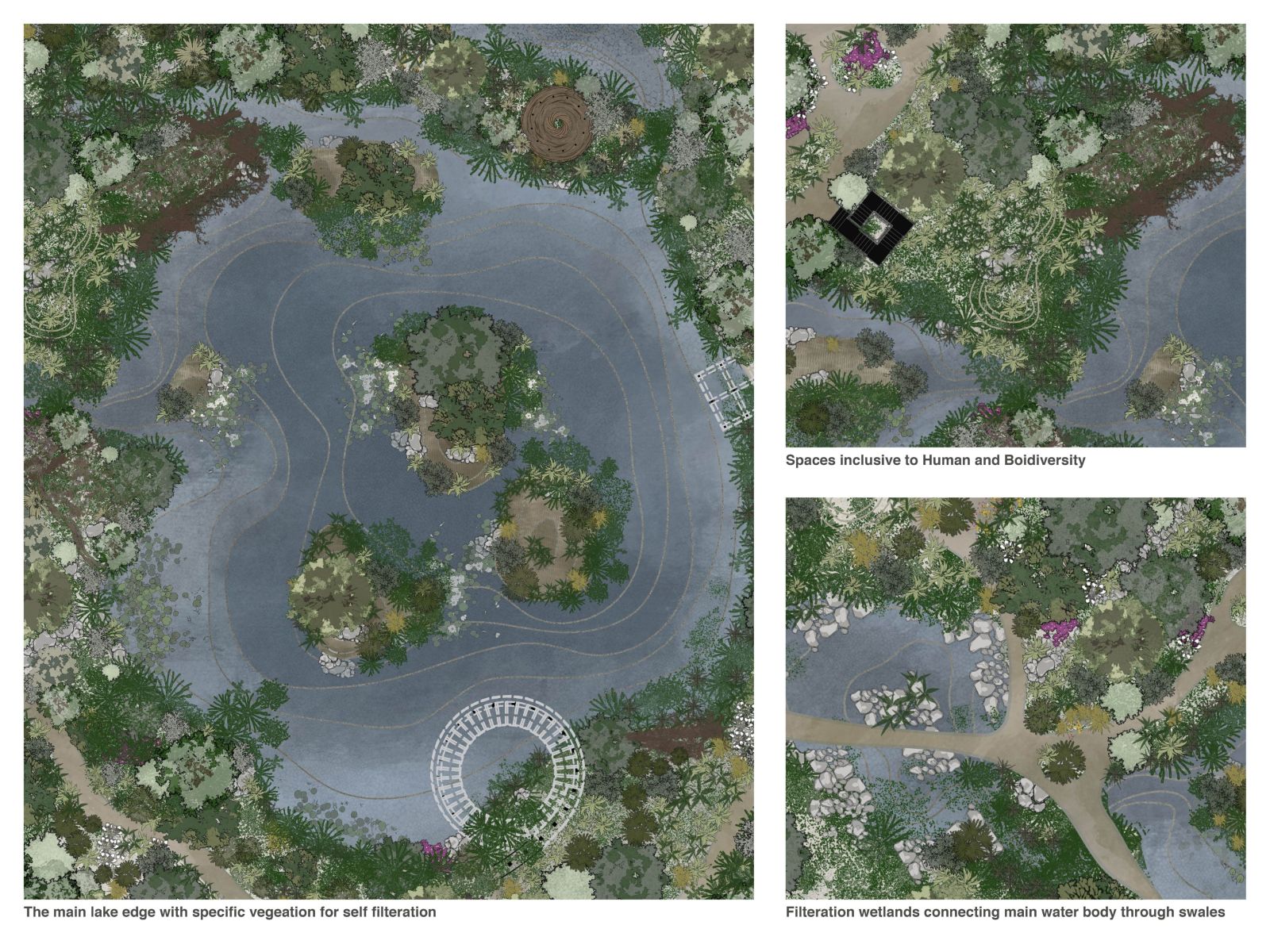
A Regenerative Hydrological Network: The blue-green engine that intercepts and treats industrial runoff. Through a sequence of sculpted landforms and autonomous filtration zones—utilizing sedimentation, rock-media beds, and phytoremediation—the basin captures hydrological shocks and recharges the depleted groundwater. This restorative landscape seamlessly interweaves technical water systems with tactile public spaces, transforming a degraded edge into a vibrant, interactive urban sanctuary.

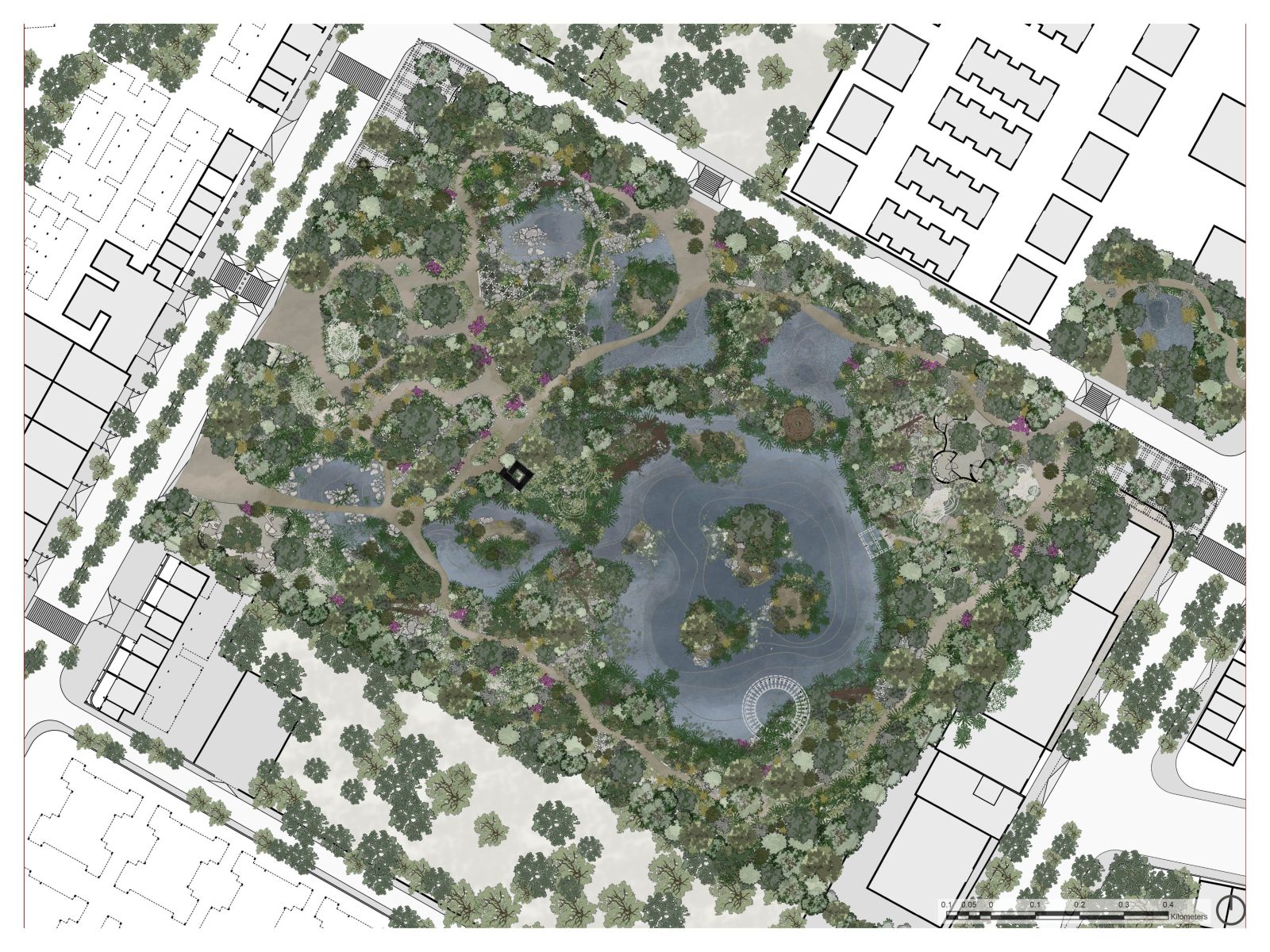
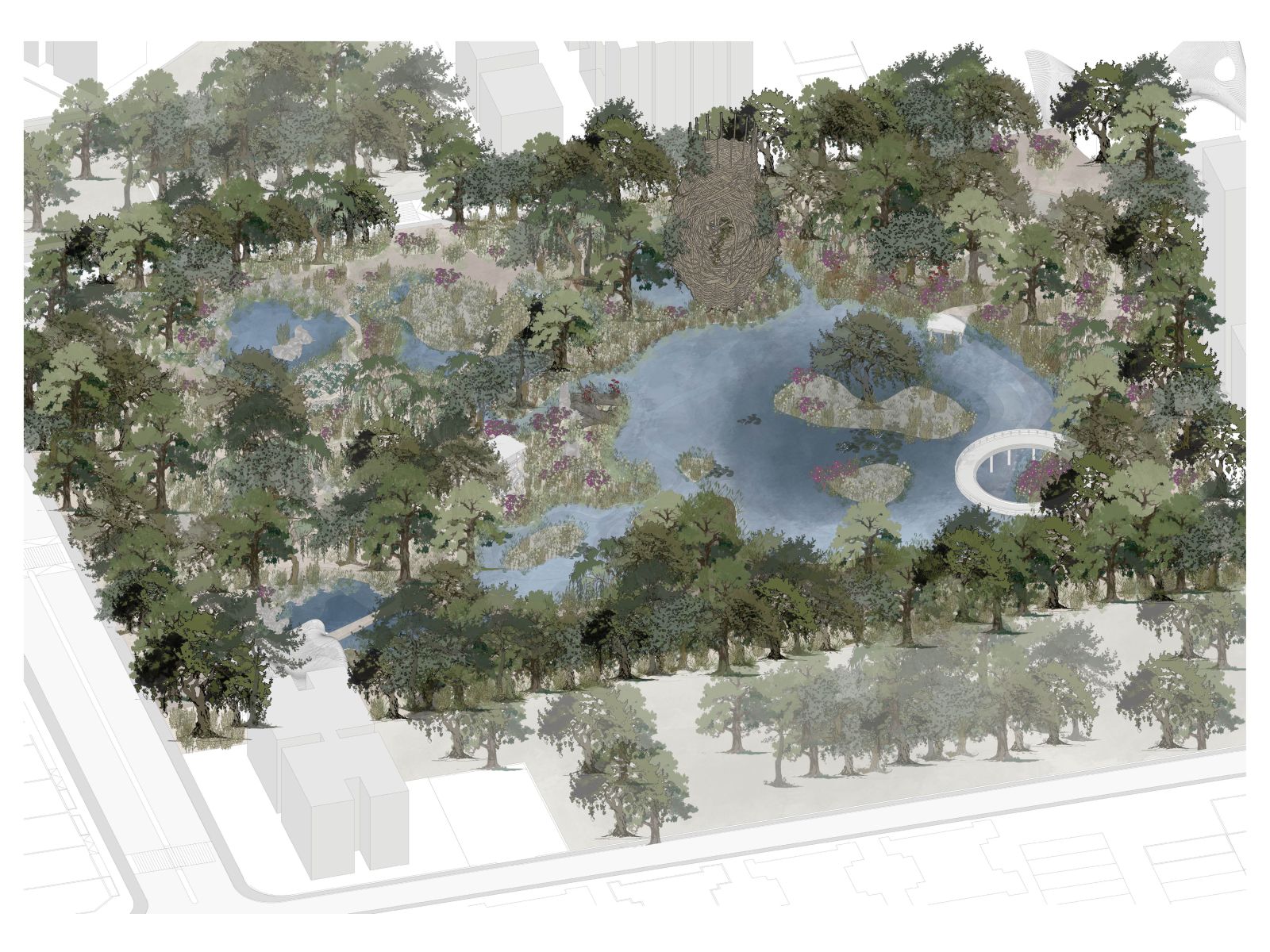
Proposed Master Plan — the strategic retention and filtration of surface runoff, the landscape functions as a cooling engine—transforming hydrological stress into a high-performance network of public spaces and native biodiversity.

The plan details a self-sustaining hydrological gradient where gravity-fed filtration through mineral and vegetative beds is punctuated by carved-out social voids for public engagement.

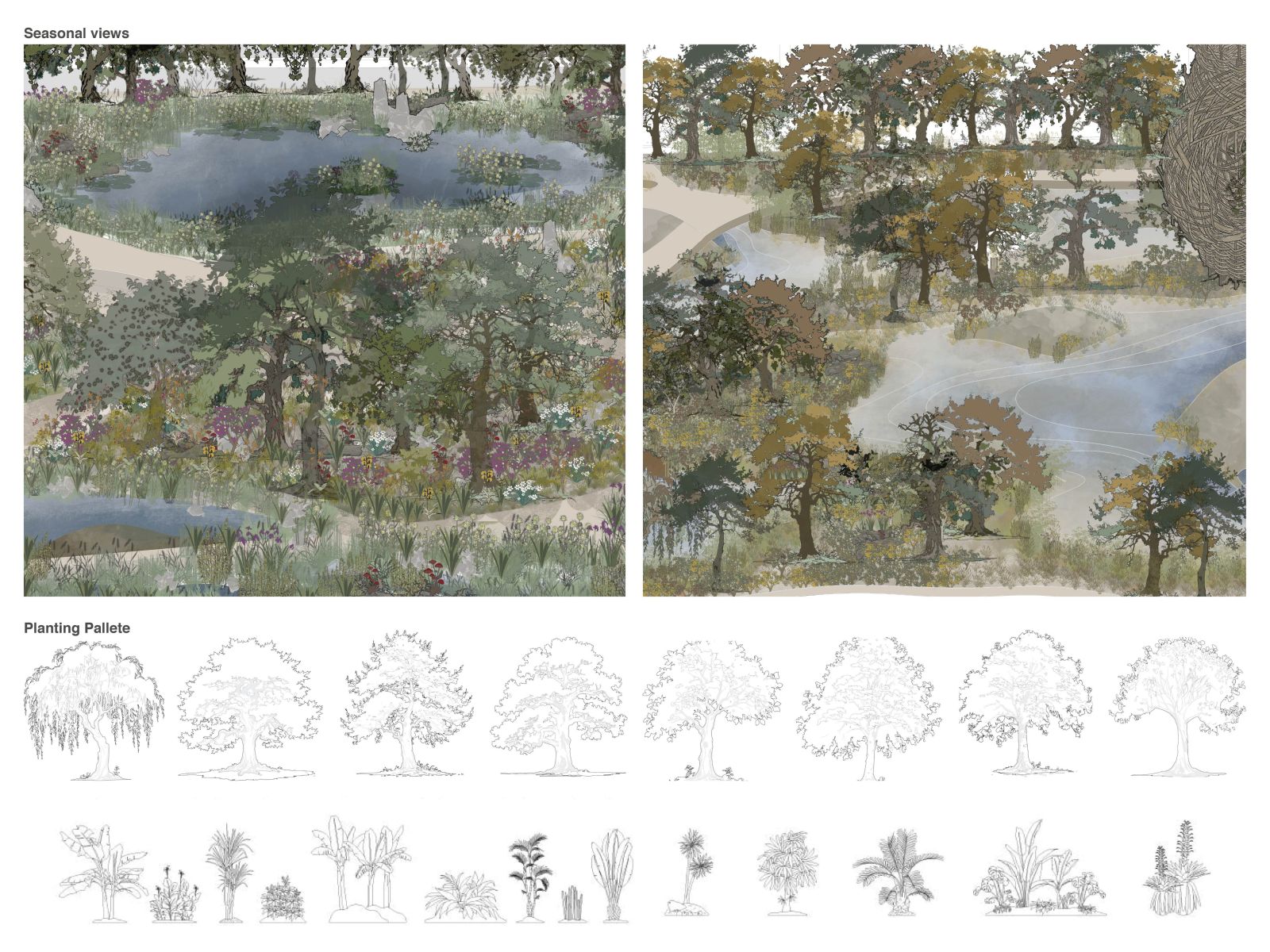
The planting framework orchestrates native species into functional zones: wetland vegetation for autonomous water purification, and layered shade trees for microclimate cooling and also shows variety according to seasonal change in pallete

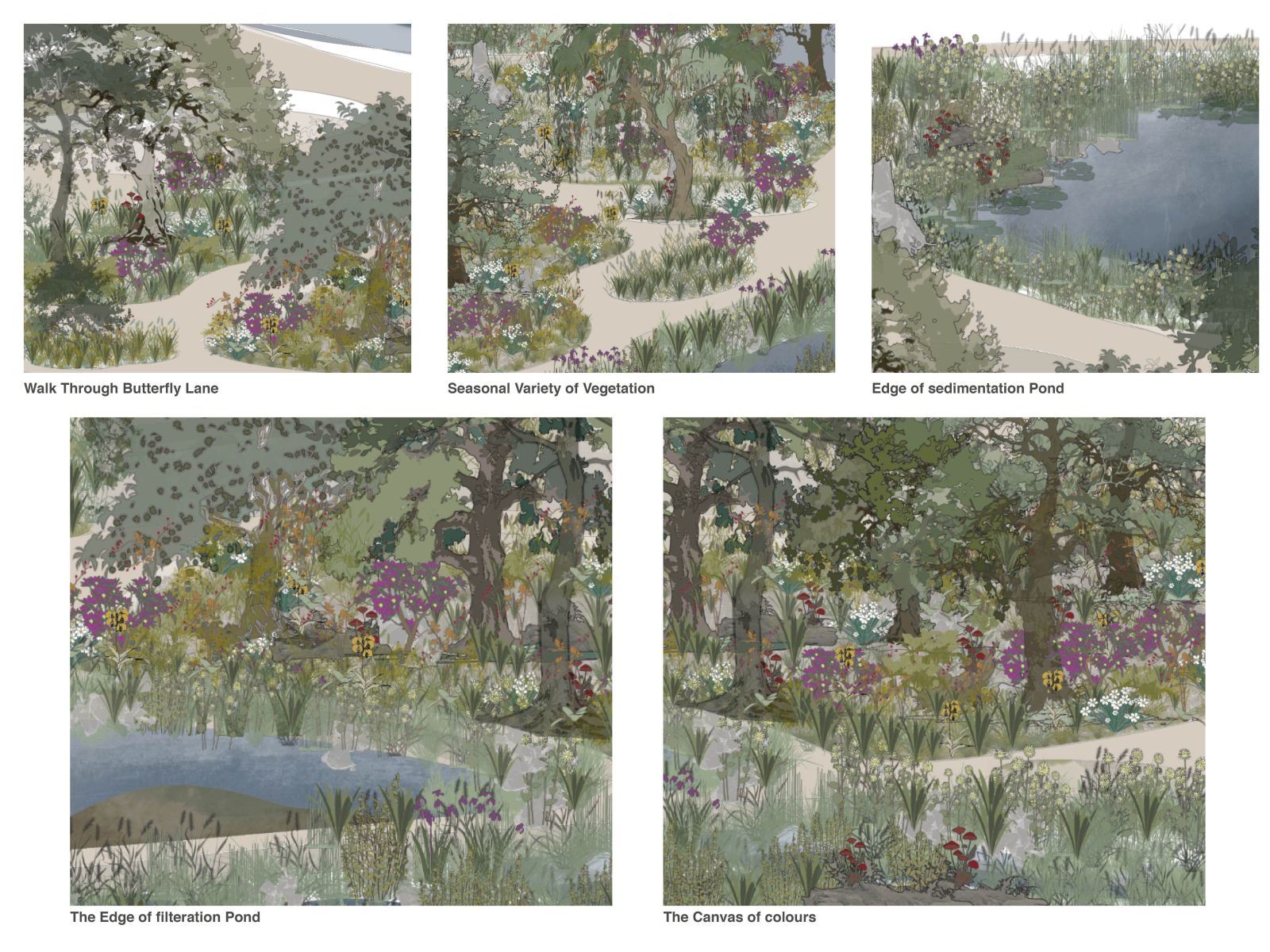
Views from throughout the site